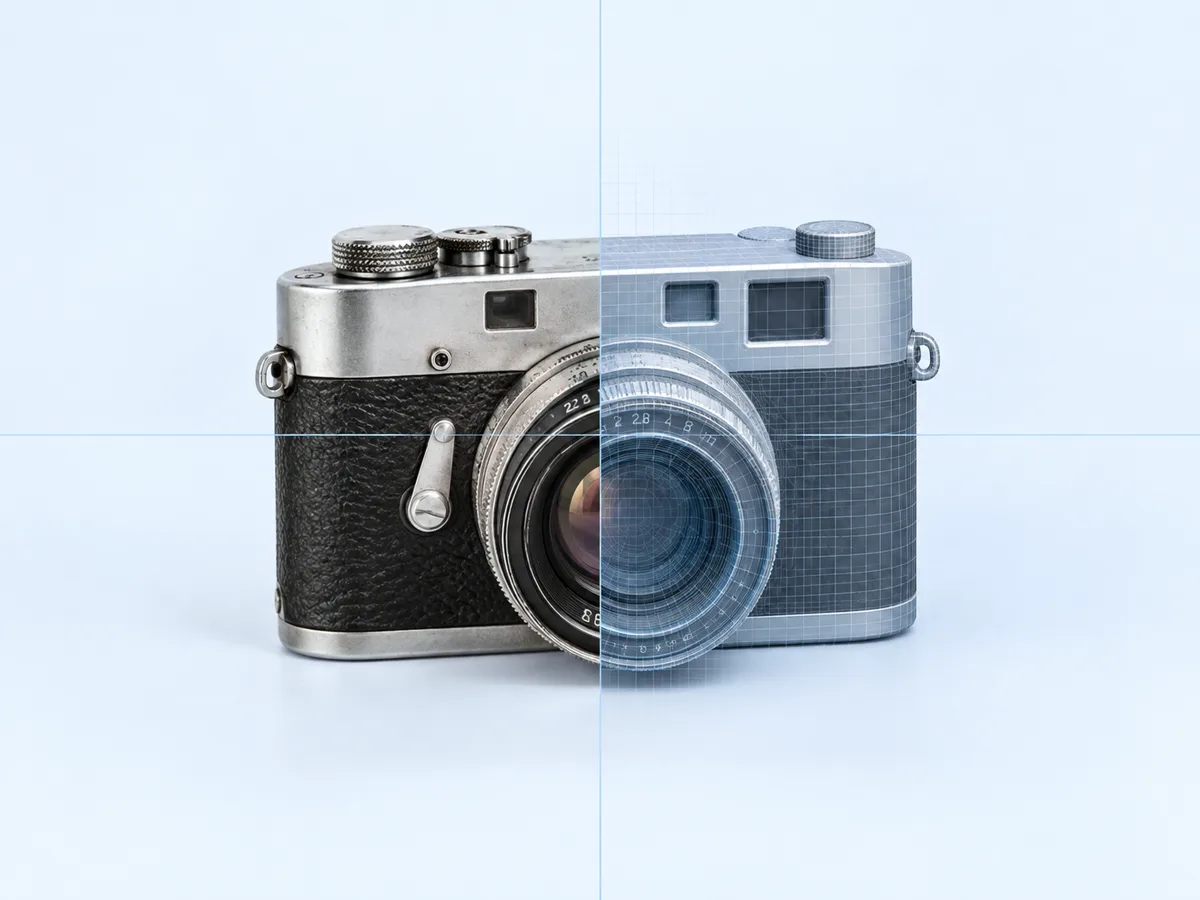
PC Print Temperature Chart
Variant
Brand
3 PC (polycarbonate) sources: nozzle 250–280 °C; the window every one of them accepts is 260–270 °C.
Bambu Lab PC
PC (polycarbonate)
- Nozzle
- 260–280 °C
- try first 270 °C
- Bed
- 90–110 °C
- try first 100 °C
- Enclosure / chamber
- 45–60 °C
- Part-cooling fan
- 0–60 %
- Drying
- 80 °C · 8 h
- Annealing
- —
- Water uptake
- 0.25 %
- saturated, 25 °C / 55 % RH
- Nozzle type
- Brass is fine
- Print speed
- up to 300 mm/s
- Density
- 1.2 g/cm³
- Heat resistance
- HDT 117 °C @1.8 MPa · HDT 112 °C @0.45 MPa · Vicat 119 °C · Tg 145 °C
Fits your printer
TDS V2.0: PVP glue on the plate. The TDS lists HDT 117 °C at 1.8 MPa and 112 °C at 0.45 MPa, as printed.
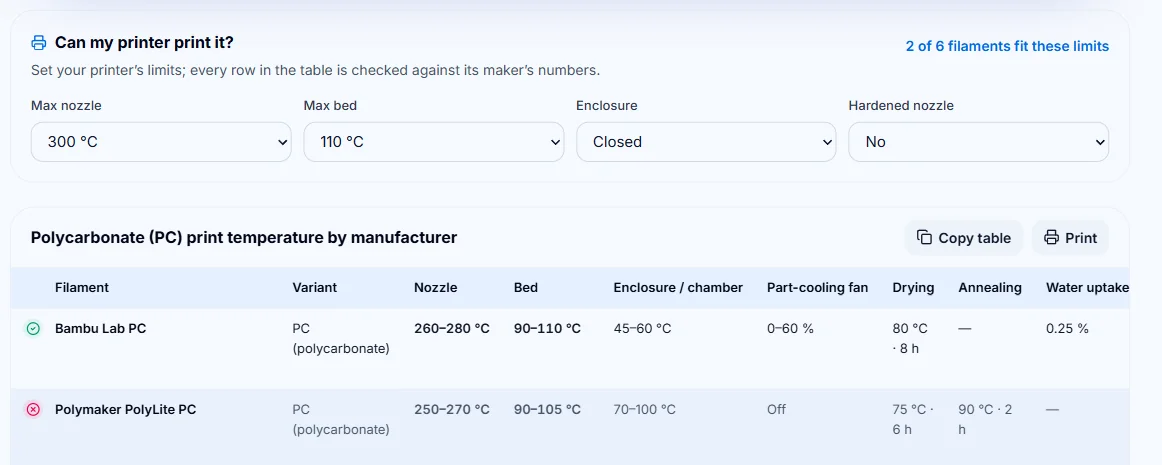
Can my printer print it?
2 of 6 filaments fit these limits
Set your printer’s limits; every row in the table is checked against its maker’s numbers.
Polycarbonate (PC) print temperature by manufacturer
| Can my printer print it? | Filament | Variant | Nozzle | Bed | Enclosure / chamber | Part-cooling fan | Drying | Annealing | Water uptake | Heat resistance | Nozzle type |
|---|---|---|---|---|---|---|---|---|---|---|---|
| OK | Bambu Lab PC | PC (polycarbonate) | 260–280 °C | 90–110 °C | 45–60 °C | 0–60 % | 80 °C · 8 h | — | 0.25 % | HDT 117 °C @1.8 MPa · HDT 112 °C @0.45 MPa · Vicat 119 °C · Tg 145 °C | Brass is fine |
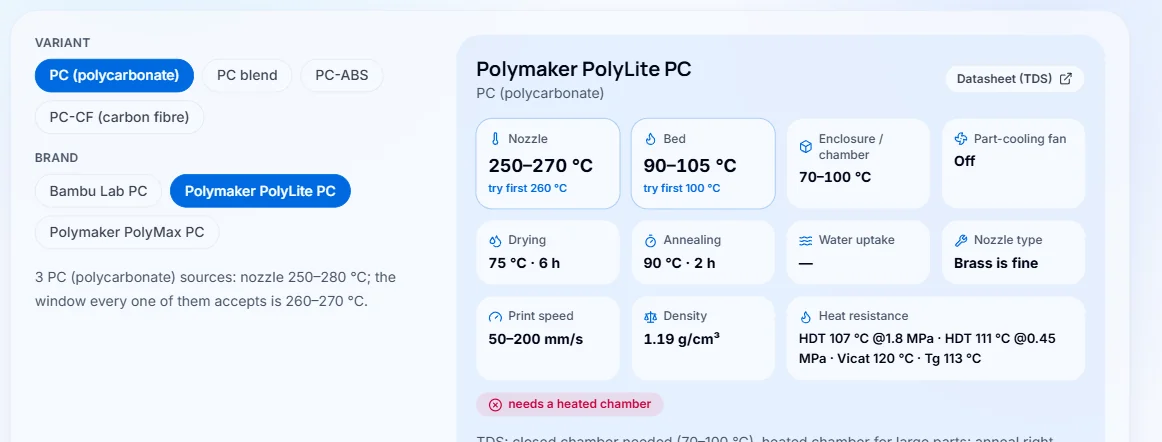
| needs a heated chamber | Polymaker PolyLite PC | PC (polycarbonate) | 250–270 °C | 90–105 °C | 70–100 °C | Off | 75 °C · 6 h | 90 °C · 2 h | — | HDT 107 °C @1.8 MPa · HDT 111 °C @0.45 MPa · Vicat 120 °C · Tg 113 °C | Brass is fine |
| needs a heated chamber | Polymaker PolyMax PC | PC (polycarbonate) | 250–270 °C | 90–105 °C | 70–100 °C | Off | 75 °C · 6 h | 90 °C · 2 h | — | HDT 99 °C @1.8 MPa · HDT 114 °C @0.45 MPa · Vicat 117 °C · Tg 113 °C | Brass is fine |
| OK | Prusament PC Blend | PC blend | 265–285 °C | 100–120 °C | Enclosure recommended | 0–30 % | 85 °C · 5 h | — | 0.15 % | HDT 93 °C @1.8 MPa · HDT 113 °C @0.45 MPa | Brass is fine |
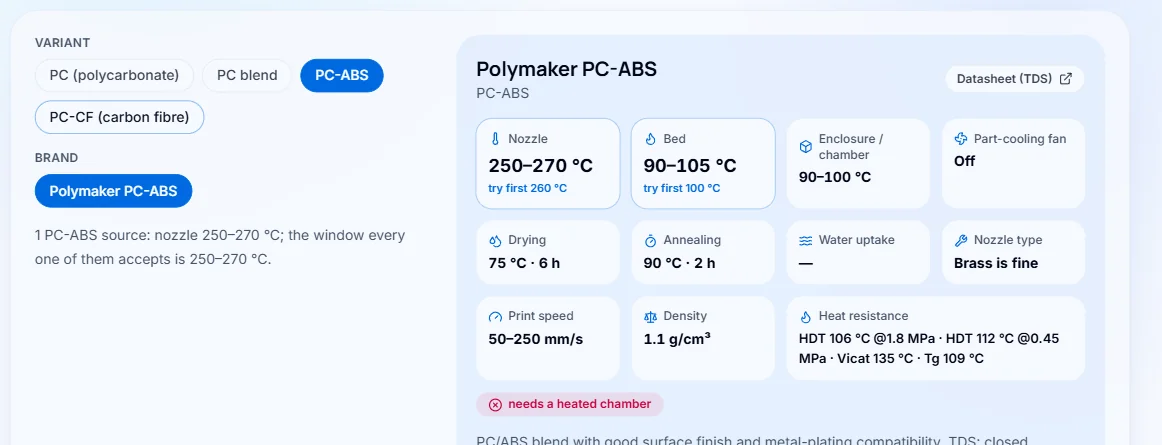
| needs a heated chamber | Polymaker PC-ABS | PC-ABS | 250–270 °C | 90–105 °C | 90–100 °C | Off | 75 °C · 6 h | 90 °C · 2 h | — | HDT 106 °C @1.8 MPa · HDT 112 °C @0.45 MPa · Vicat 135 °C · Tg 109 °C | Brass is fine |
| needs a hardened nozzle | Prusament PC Blend Carbon Fiber | PC-CF (carbon fibre) | 275–295 °C | 100–120 °C | Not needed | 0–20 % | 90 °C · 4 h | — | 0.11 % | HDT 106 °C @1.8 MPa · HDT 114 °C @0.45 MPa | Hardened steel |
Values copied from each manufacturer’s datasheet or official page, checked 2026-11-24. The label on your spool wins if it differs.
- Chamber temperatures included
- PC, PC blend, PC-ABS, PC-CF
- Copy or print the table
- Warping and cracking fixes
PC print temperature in three numbers
Polycarbonate is the hottest material in our charts on the bed and in the chamber.
- 250–295 °Cnozzle range across six PC datasheets
- 90–120 °Cbed range; every PC source starts at 90 °C or more
- 45–100 °Cchamber temperatures the datasheets give
Printing polycarbonate in four steps
PC needs a hot bed, a warm closed printer and dry filament. The recording shows the chart and the printer check in use.
Pick PC, PC blend, PC-ABS or PC-CF
Then the brand on your spool. The card shows nozzle and bed with a first value, plus chamber, fan, drying, annealing and heat deflection.
Check the printer first
PC needs at least a 90 °C bed and most brands want a closed or heated chamber. The printer check shows which grades your machine can hold.
Dry, glue, heat-soak
Dry at 75–90 °C depending on the brand, use glue as a release layer, and let the closed chamber warm up before printing.
Anneal right after printing
Polymaker anneals PolyLite PC, PolyMax PC and PC-ABS at 90 °C for 2 h straight after printing to release internal stress.
Pure PC, PC blends and PC-ABS compared
Three makers, six products. The nozzle windows overlap; the chamber advice ranges from “not needed” to 100 °C.
PC · nozzle temperature by variant
- PC (polycarbonate)250–280 °C
- PC blend265–285 °C
- PC-ABS250–270 °C
- PC-CF (carbon fibre)275–295 °C
PC · bed temperature by variant
- PC (polycarbonate)90–110 °C
- PC blend100–120 °C
- PC-ABS90–105 °C
- PC-CF (carbon fibre)100–120 °C
PC set-up at a glance · PC (polycarbonate)
Pure PC: 260–270 °C fits all three
Bambu Lab PC lists 260–280 °C; Polymaker PolyLite PC and PolyMax PC both list 250–270 °C. The window all three share is 260–270 °C, so 265 °C is a safe first PC print temperature.
Bed: 90 °C is the floor
Bambu PC asks for 90–110 °C with PVP glue, Polymaker 90–105 °C on textured PEI with glue when needed, Prusament PC Blend 110 ± 10 °C. If your bed tops out below 90 °C, PC is not an option.
The chamber is where PC differs
Bambu Lab gives 45–60 °C. Polymaker says a closed chamber is needed at 70–100 °C for its PCs and 90–100 °C for PC-ABS, with a heated chamber for large parts. Prusament PC Blend recommends a skirt or enclosure; its carbon-fibre version says no enclosure is needed.
PC blends print easier
Prusament PC Blend prints at 275 ± 10 °C with 20 % fan and is described as very little hygroscopic. Prusa recommends a 4 mm brim for parts over 5 cm. It is a good first polycarbonate for printers without heated chambers.
PC-ABS: toughness and a good surface
Polymaker PC-ABS prints at 250–270 °C on a 90–105 °C bed. Polymaker highlights its surface finish and compatibility with metal plating, and its 135 °C Vicat point is the highest of the PCs here.
Heat resistance above ABS and ASA
Heat deflection at 1.8 MPa ranges from 93 °C (PC Blend) to 117 °C (Bambu PC), against 84 °C for Bambu ABS. Bambu also lists a glass transition of 145 °C for its PC.
PC vs PC blend vs PC-ABS vs PC-CF settings
Ranges span every datasheet of that type in the chart.
PC (polycarbonate)
- Nozzle
- 250–280 °C
- Bed
- 90–110 °C
- HDT 1.8 MPa
- 99–117 °C
- Enclosure
- heated
- Hardened nozzle
- no
PC blend
- Nozzle
- 265–285 °C
- Bed
- 100–120 °C
- HDT 1.8 MPa
- 93 °C
- Enclosure
- closed
- Hardened nozzle
- no
PC-ABS
- Nozzle
- 250–270 °C
- Bed
- 90–105 °C
- HDT 1.8 MPa
- 106 °C
- Enclosure
- heated
- Hardened nozzle
- no
PC-CF (carbon fibre)
- Nozzle
- 275–295 °C
- Bed
- 100–120 °C
- HDT 1.8 MPa
- 106 °C
- Enclosure
- optional
- Hardened nozzle
- yes
| Setting | PC | PC blend | PC-ABS | PC-CF |
|---|---|---|---|---|
| Nozzle | 250–280 °C | 265–285 °C | 250–270 °C | 275–295 °C |
| Bed | 90–110 °C | 100–120 °C | 90–105 °C | 100–120 °C |
| Enclosure | 45–60 °C (Bambu); 70–100 °C (Polymaker) | Skirt or enclosure recommended | 90–100 °C (Polymaker) | Not needed (Prusament) |
| Part fan | 0–60 % (Bambu); off (Polymaker) | 20 % (0–30 %) | Off | 0 % (0–20 %) |
| Drying | 80 °C 8 h; 75 °C 6 h | 85 °C 5 h (Prusa drying guide) | 75 °C 6 h | 90 °C 4 h (Prusa drying guide) |
| Annealing | 90 °C 2 h (Polymaker) | — | 90 °C 2 h | Raises resistance to 130 °C (Prusament) |
| HDT at 1.8 MPa | 99–117 °C | 93 °C | 106 °C | 106 °C |
| Nozzle type | Brass is fine | Brass is fine | Brass is fine | Hardened steel |
Bambu’s PC datasheet prints 117 °C at 1.8 MPa and 112 °C at 0.45 MPa; the values are quoted as published.
Chamber heat, annealing and clarity
Three things the PC datasheets care about more than any other material in our charts.
PC enclosure temperature by maker
Bands are chamber temperatures stated on the datasheets; dots mark makers that only say “closed printer” or “room temperature”. The warmest chamber of any filament here
Polymaker asks for 70–100 °C around PolyLite PC and PolyMax PC and 90–100 °C for PC-ABS. Bambu Lab gives 45–60 °C. A passive enclosure rarely reaches 70 °C, which is why large PC parts are hard on hobby printers.
PC annealing settings
- Polymaker PolyLite PC90 °C · 2 h
- Polymaker PolyMax PC90 °C · 2 h
- Polymaker PC-ABS90 °C · 2 h
Annealing temperature and time from each datasheet that publishes one. Parts can shrink or warp in the oven; use an oven with even heat, not a microwave. Anneal to release stress
Polymaker recommends annealing its PC grades at 90 °C for 2 h right after printing. Prusa says annealing raises PC Blend Carbon Fiber’s heat resistance from 114 °C to 130 °C.
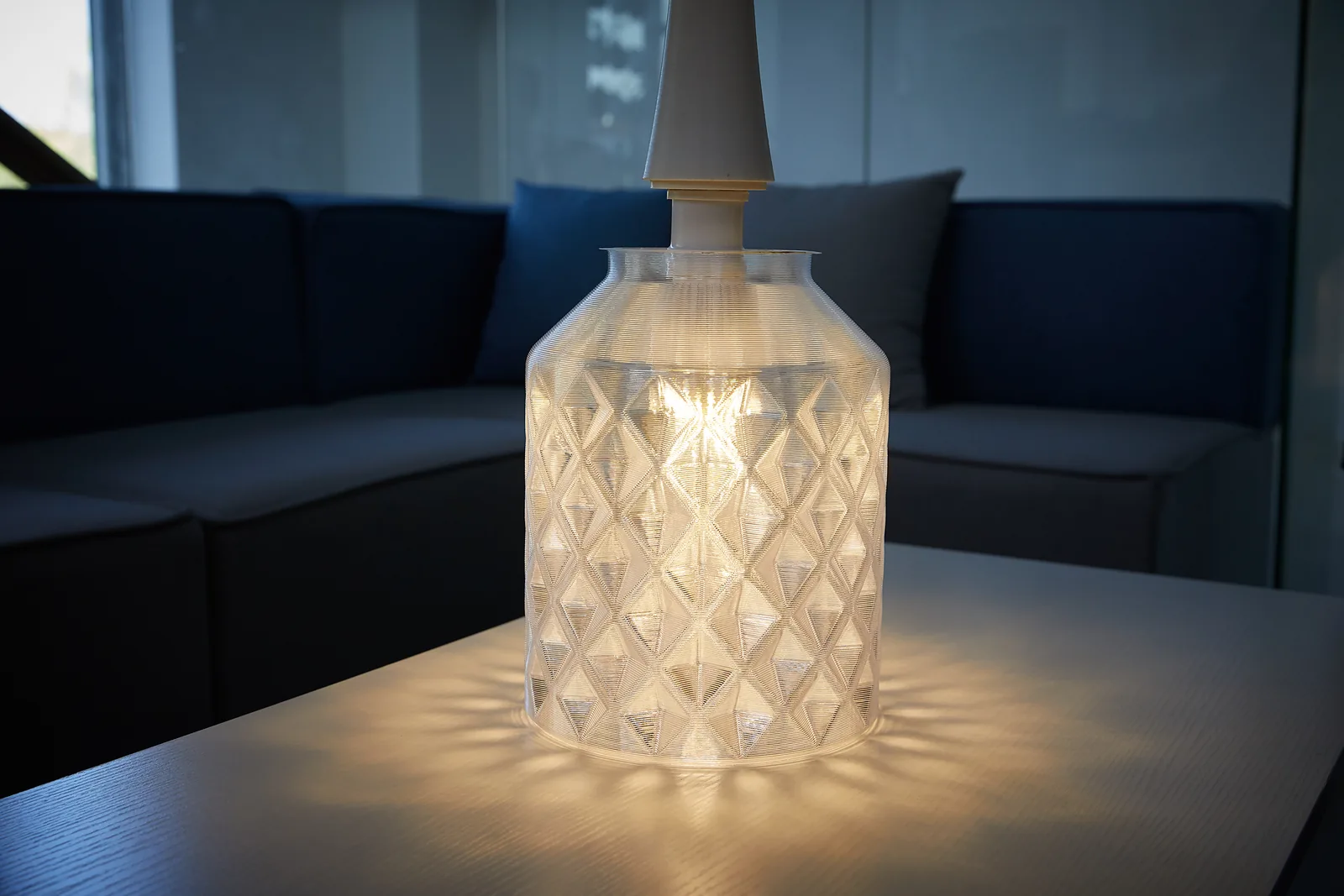
Naturally transparent
Bambu Lab describes PC as a naturally transparent thermoplastic. Clear PC prints suit light diffusers and lamp shades; dry the spool well, because moisture shows up as haze and bubbles.
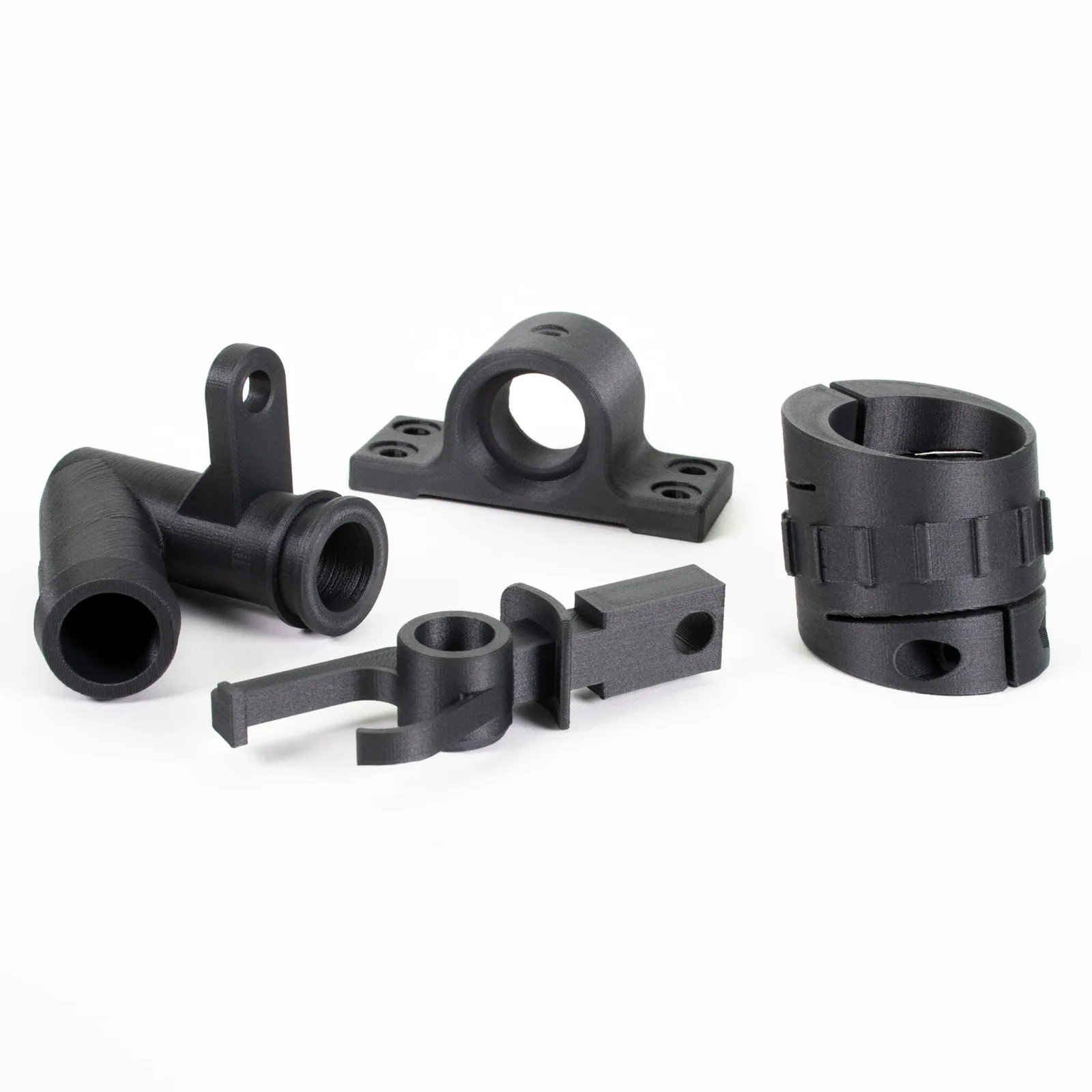
Tough functional parts
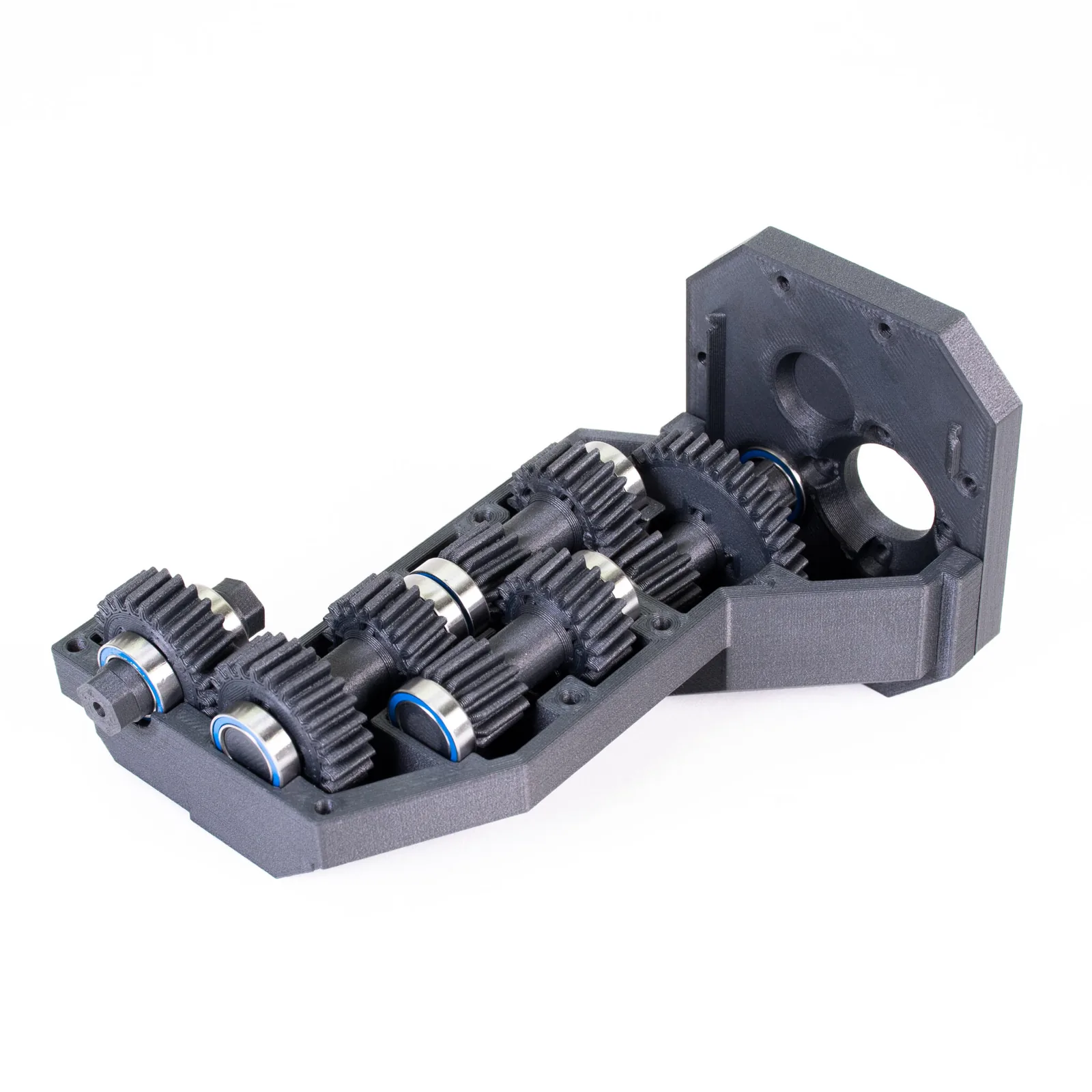
Reference photos from the Prusament PC Blend page and Prusa’s polycarbonate guide.
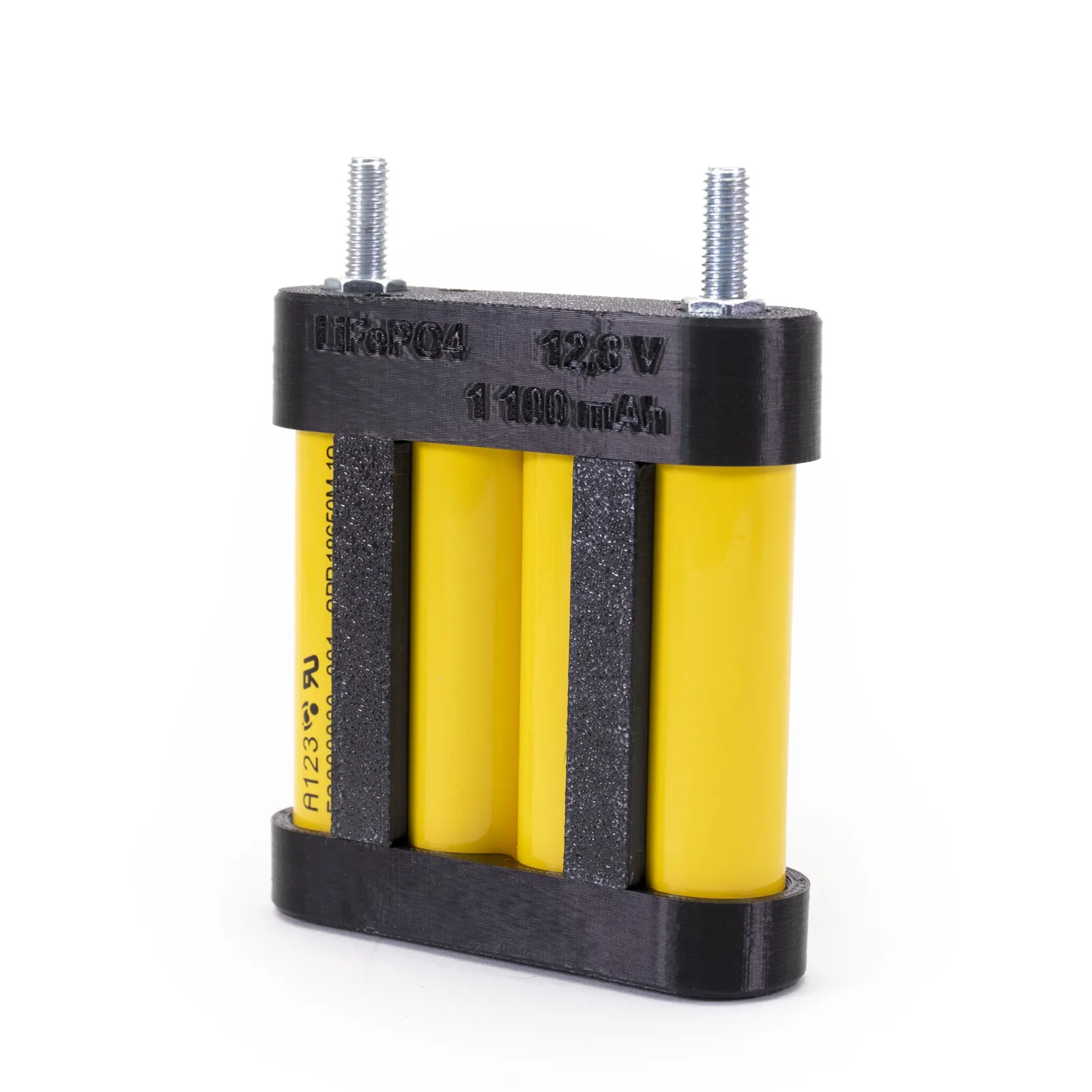
Battery holders
Clamped, screwed and warm in use: a typical PC job. Keep walls thick and print with the chamber closed.
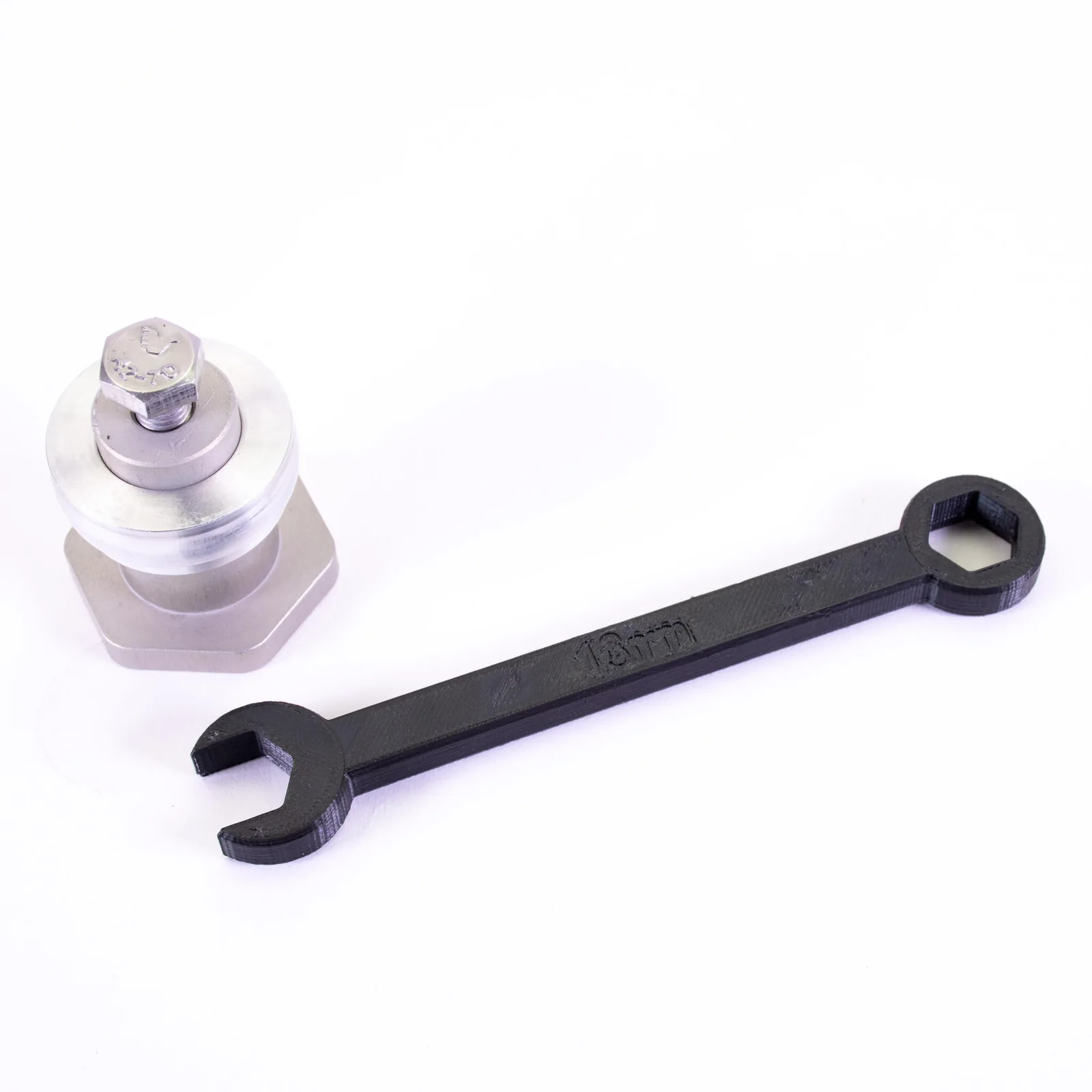
Tools and wrenches
PC’s impact resistance suits hand tools that get dropped. Print flat for strength along the handle.
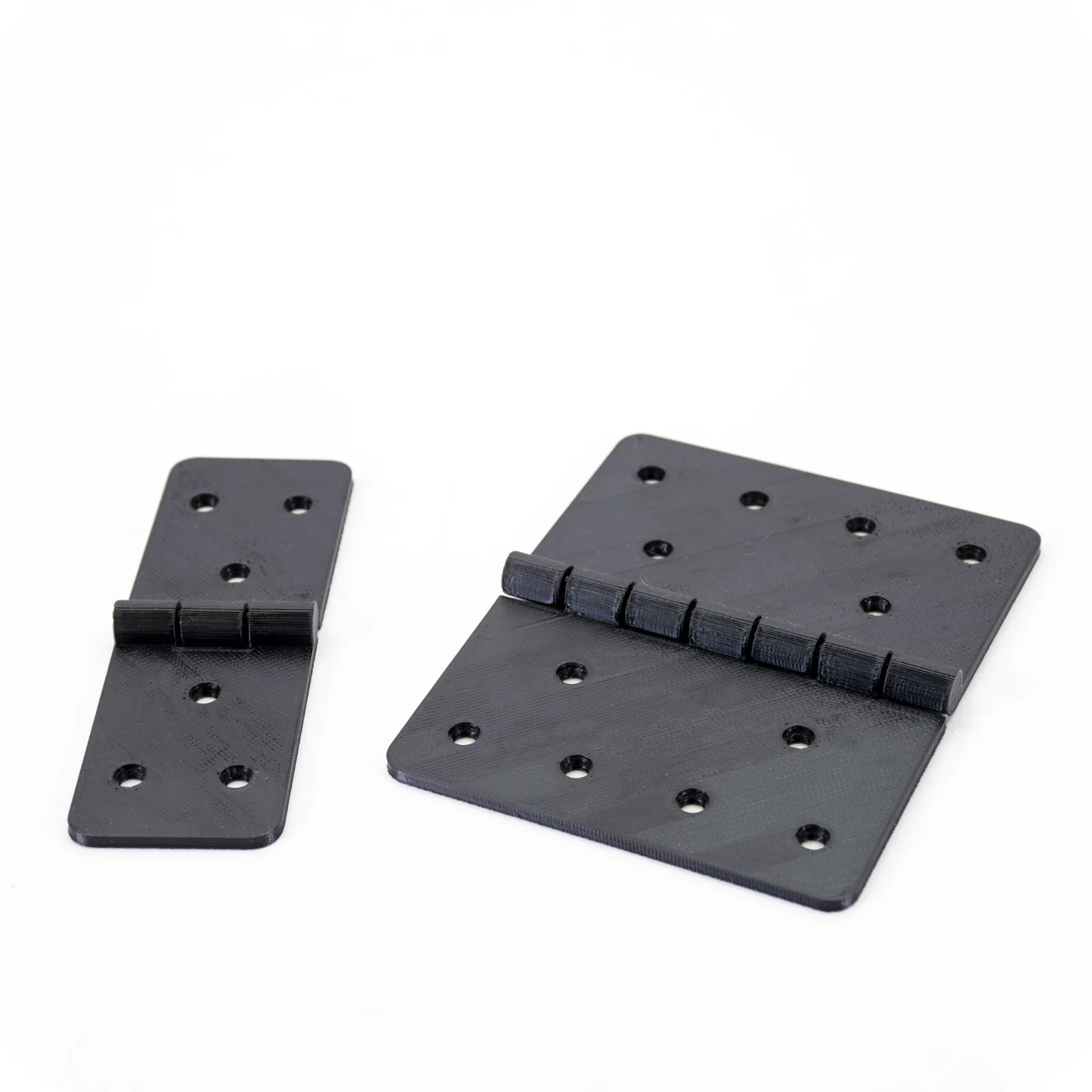
Hinges
Pins and knuckles take repeated load. PC blends print them with less warping than pure PC.
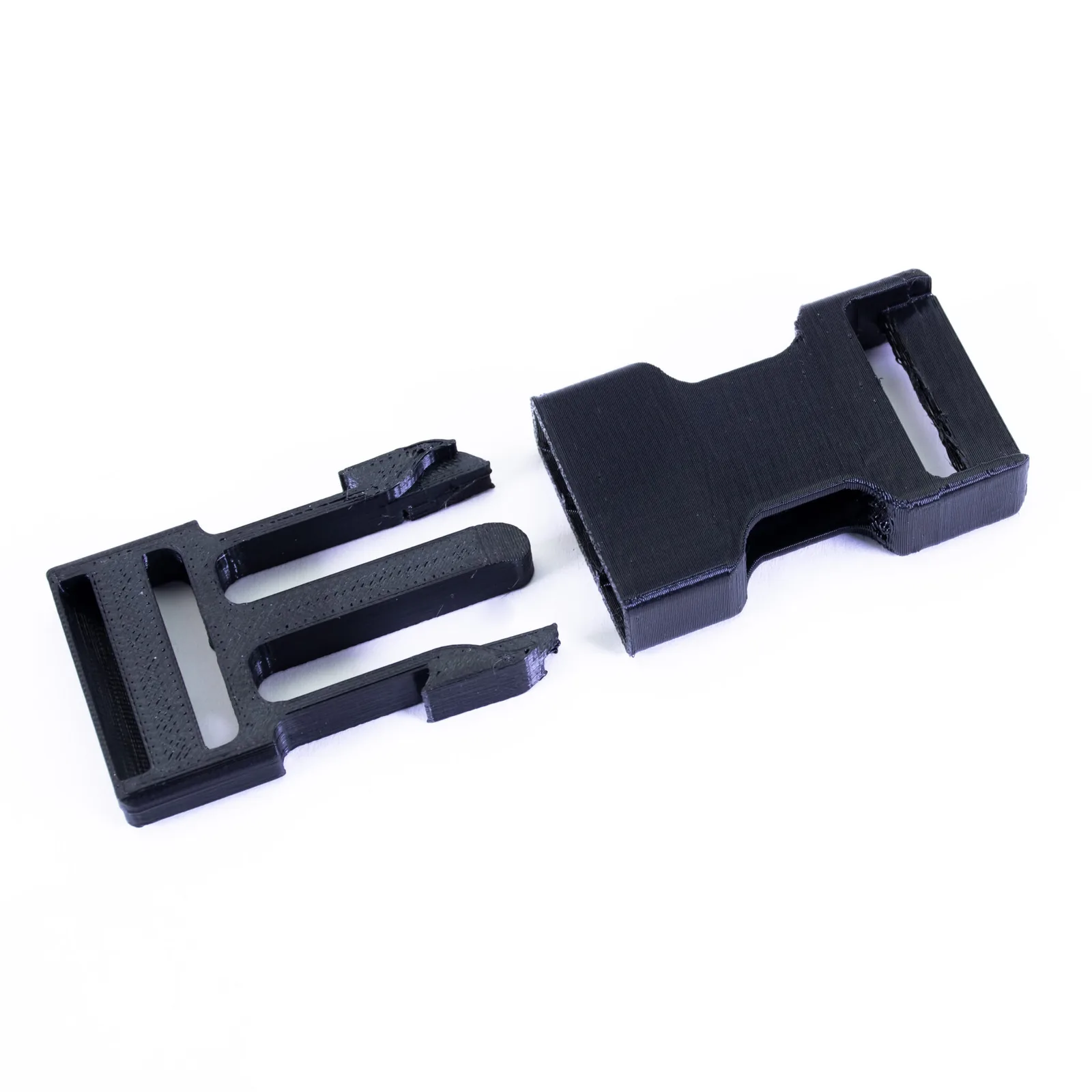
Buckles and clips
Snap-fit parts flex every time they close. Dry filament keeps the layers bonded so they do not crack.
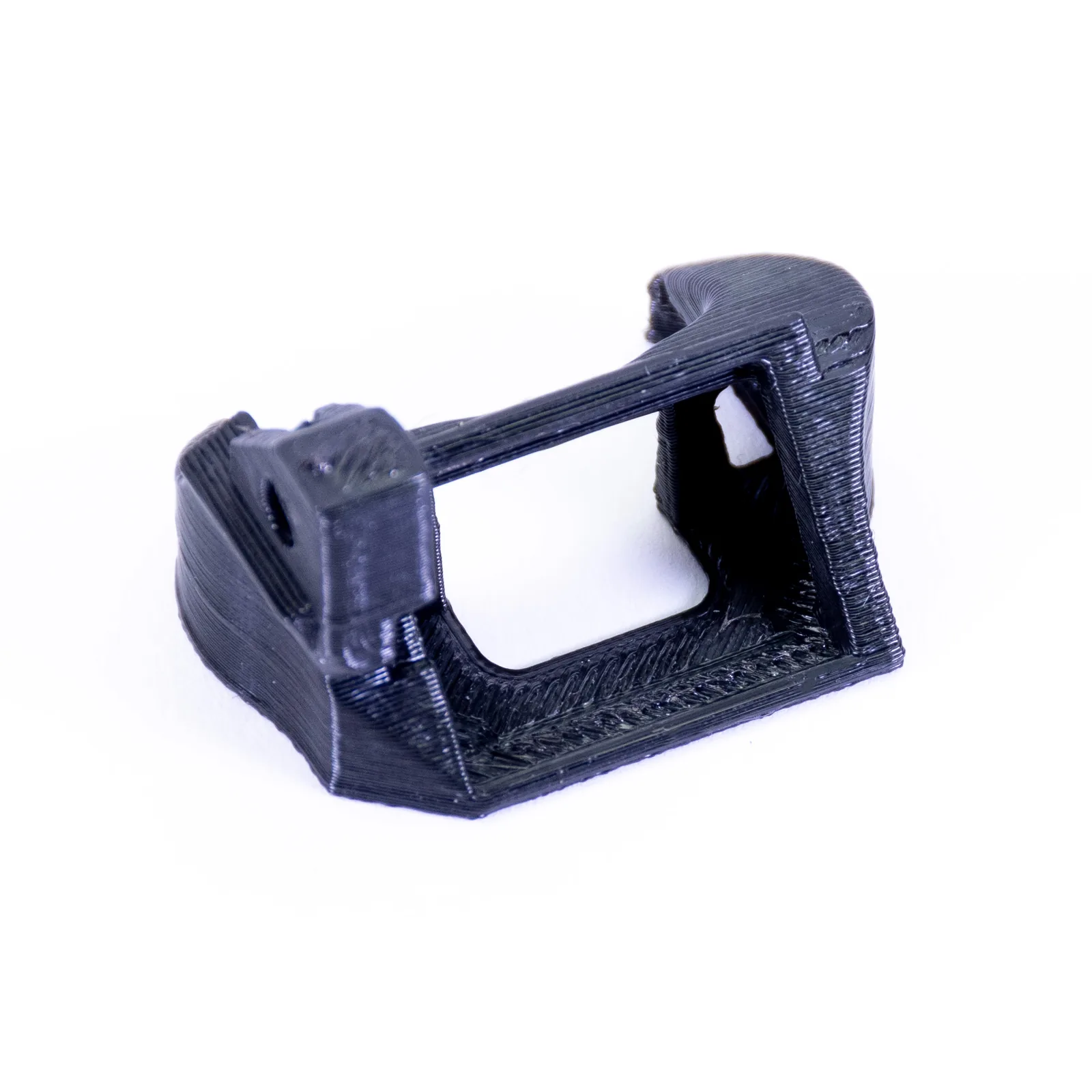
Fan shrouds near hot ends
Parts close to a heater need a high deflection temperature. PC sits above ABS and ASA in every datasheet here.
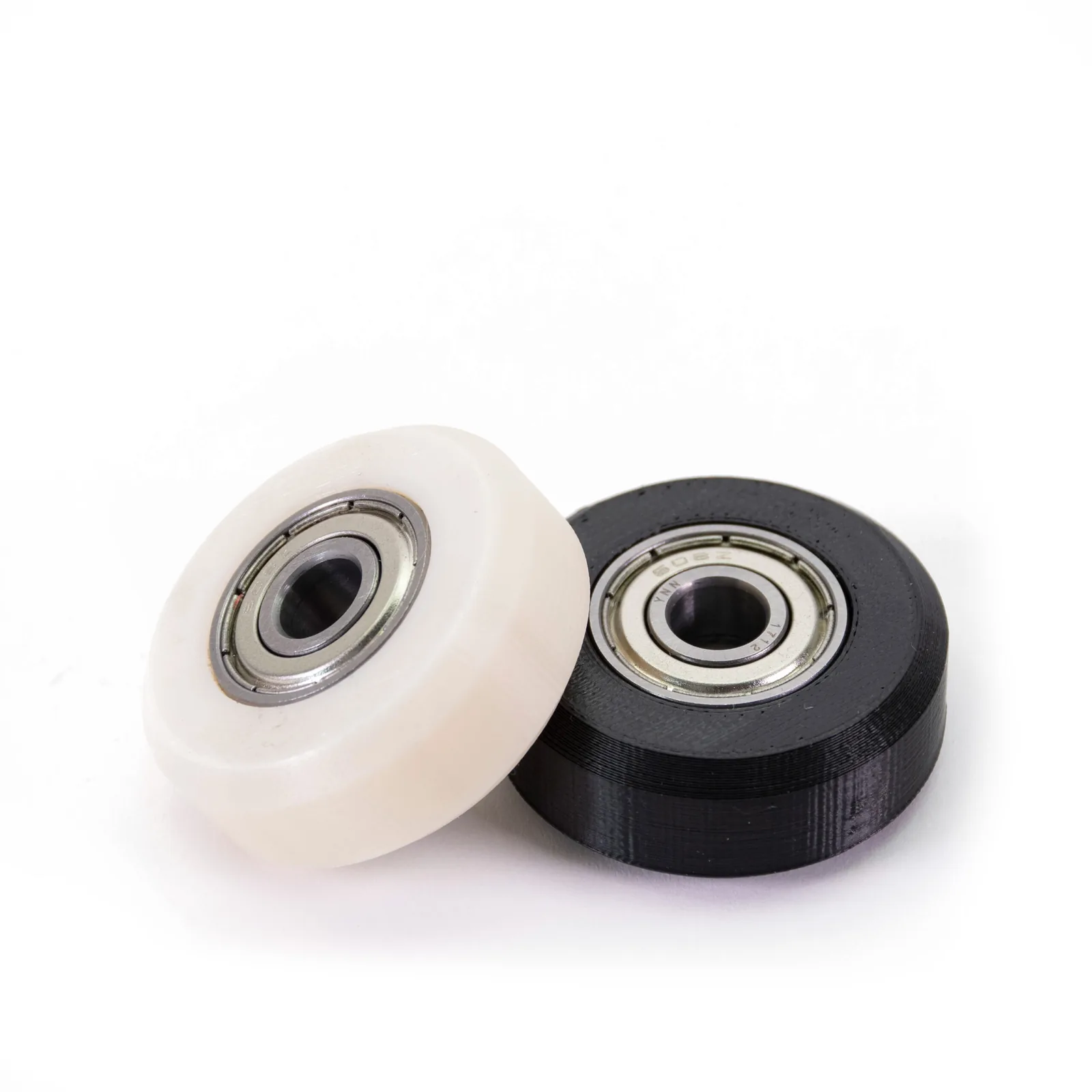
Wheels and rollers
Bearings press into PC without splitting it. Leave a press-fit tolerance and anneal before fitting.
PC problems by symptom
PC fails when the part cools unevenly or the filament is wet. Heat the chamber first, then tune.
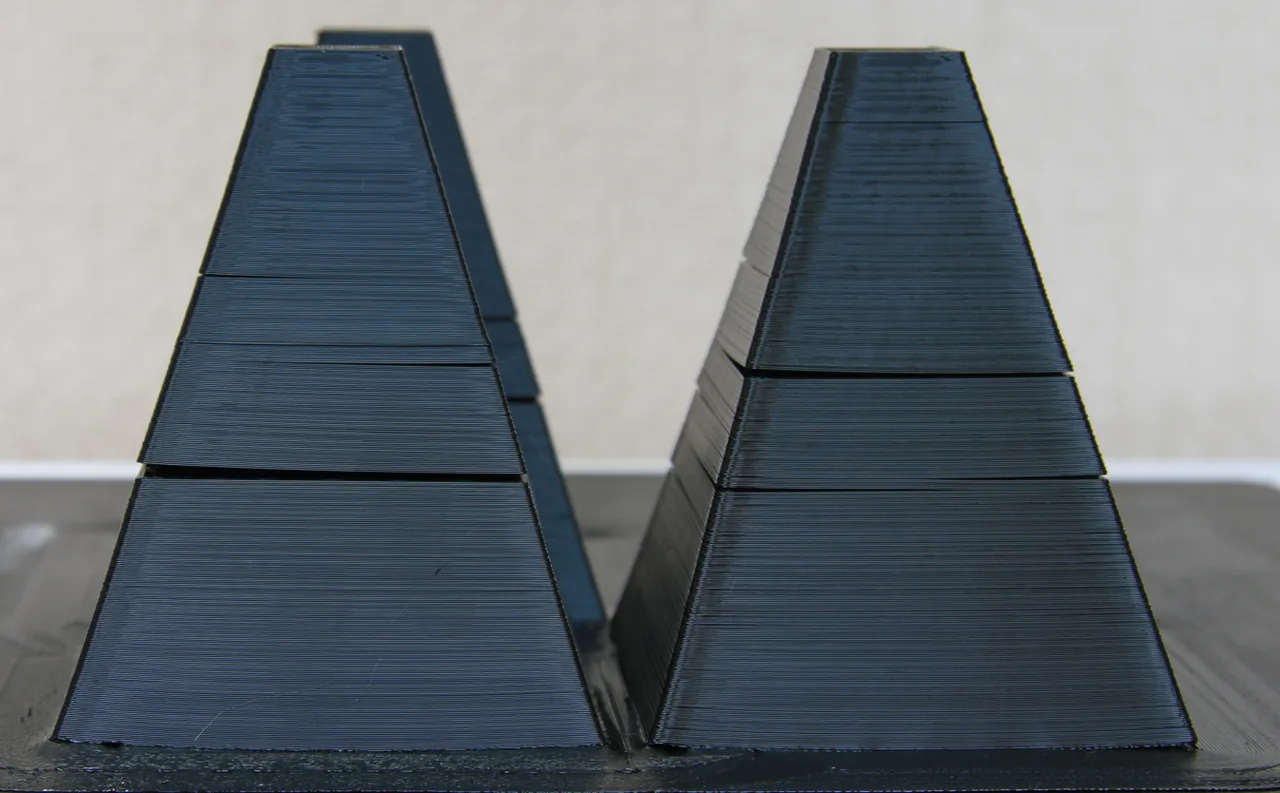
Why corners lift
Hot layers shrink as they cool. If the air above the part is much colder than the bed, the upper layers pull harder than the bed can hold. Corners lifting off the bed
Root cause: PC shrinks as it cools and the bed alone cannot hold large parts.
What helps
- Close the printer and pre-heat the chamber.
- Run the bed at the brand’s value (90–120 °C) with glue.
- Add a 4 mm brim for parts over 5 cm, as Prusa suggests.
 02
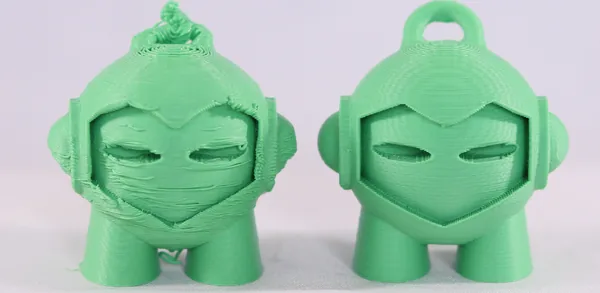
Cracks between layers
Root cause: Upper layers cooled too far, often near the top of tall parts.
What helps
- Fan off or low (Polymaker: off).
- Raise the chamber temperature toward the datasheet value.
- Print toward the top of the nozzle range.
 03
Curling tops and overhangs
Root cause: Thin edges cool and shrink faster than the body.
What helps
- Allow a little fan for overhangs only (PC Blend: 20 %).
- Slow down outer walls on overhangs.
- Reduce overhang angles in the design.
PC drying: temperature and time
- Prusament PC Blend Carbon Fiber90 °C · 4 h
- Prusament PC Blend85 °C · 5 h
- Bambu Lab PC80 °C · 8 h
- Polymaker PolyLite PC75 °C · 6 h
- Polymaker PolyMax PC75 °C · 6 h
- Polymaker PC-ABS75 °C · 6 h
Bar length is the drying temperature; the label adds the hours. “+” means “at least”. Bubbles, haze or popping
Root cause: Moisture in the filament turns to steam in the nozzle.
What helps
- Dry at the maker’s setting: Bambu 80 °C 8 h, Polymaker 75 °C 6 h.
- Print from a sealed box below 20 % RH (Bambu).
- Dry clear PC especially well; haze shows.
Fibre-filled filament and the nozzle
Polymaker’s Fiberon datasheets put the life of a brass nozzle at roughly 9 hours with these filaments. Bambu Lab requires a hardened steel nozzle for PA-CF/GF and recommends 0.6 mm. PC-CF under-extruding after a few spools
Root cause: Carbon fibre has worn the brass nozzle.
What helps
- Fit a hardened steel nozzle (Prusa: needed for PC Blend CF).
- Check the bore after long jobs.
- Keep the fan at 0–20 %, as the PC-CF datasheet lists.
PC heat deflection, 1.8 MPa
- Bambu Lab PC117 °C
- Polymaker PolyLite PC107 °C
- Polymaker PC-ABS106 °C
- Prusament PC Blend Carbon Fiber106 °C
- Polymaker PolyMax PC99 °C
- Prusament PC Blend93 °C
- ABS (Bambu ABS)84 °C
- PETG (Bambu PETG Basic)68 °C
- PLA (Bambu PLA Basic)54 °C
HDT at 1.8 MPa (ISO 75) from each datasheet, highest first; grey bars are PLA, PETG and ABS for scale. Products that publish no 1.8 MPa value are left out. Part sags near heat
Root cause: The load or temperature is above the grade’s heat deflection.
What helps
- Pick a grade with a higher HDT from the chart.
- Anneal after printing (Polymaker: 90 °C, 2 h).
- PC Blend CF: annealing raises resistance to 130 °C (Prusa).
Sources for the PC chart
Read from these manufacturer documents on 2026-11-24. Where one field comes from a second official page, both are listed.
- Bambu Lab PC — Datasheet (TDS)
- Polymaker PolyLite PC — Datasheet (TDS)
- Polymaker PolyMax PC — Datasheet (TDS)
- Prusament PC Blend — Datasheet (TDS)
- Prusament PC Blend product page
- Prusa Knowledge Base — Drying filament
- Polymaker PC-ABS — Datasheet (TDS)
- Prusament PC Blend Carbon Fiber — Datasheet (TDS)
- Prusament PC Blend Carbon Fiber product page
Why use this PC temperature chart
Six polycarbonate datasheets, with the chamber and annealing data PC depends on.
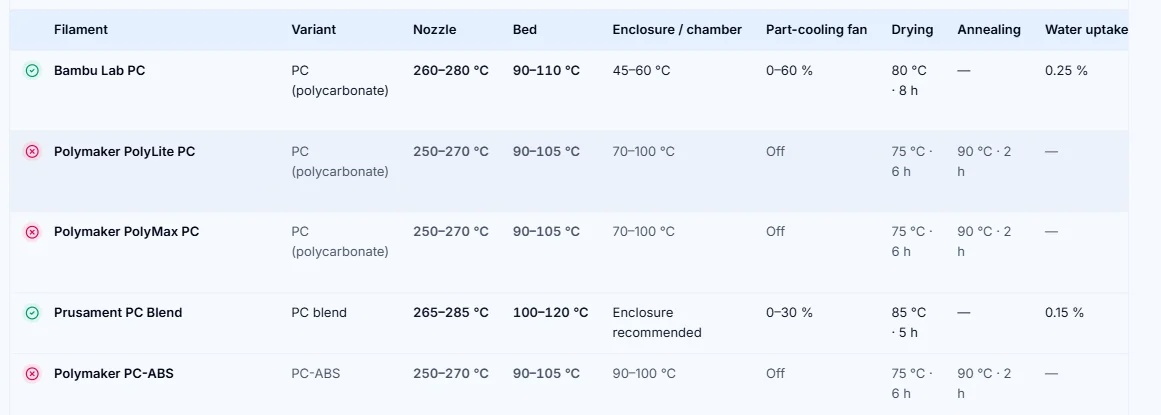
Every value has a source
Each row links to the datasheet or product page it came from. Nothing is averaged; a field the maker does not publish shows as a dash.
PC water uptake by datasheet
- Bambu Lab PC · saturated0.25 %
- Prusament PC Blend · after 7 days0.15 %
- Prusament PC Blend Carbon Fiber · after 7 days0.11 %
Each maker tests differently (saturated at 55 % RH, equilibrium at 70 % RH, or 7 days at 22 % RH), so compare within one brand first. Products without a published figure are left out. Water uptake per brand
PC absorbs little compared with nylon, but it still needs drying. The published water uptake sits next to each maker’s drying setting.
Checks your printer
Enter max nozzle, max bed, enclosure and nozzle type. You see which PC grades need a heated chamber your printer does not have.
PC-ABS and blends included
Not every “PC” is pure polycarbonate. PC blend and PC-ABS sit beside pure PC so you can see what changes.
PC-CF with its own row
Carbon-fibre PC runs hottest and needs a hardened nozzle, but Prusa says it needs no enclosure.
A first value to try
Every range gets a midpoint for a temperature tower, rounded to 5 °C. Copy or print the table for the printer room.
PC print temperature FAQ
Polycarbonate questions, answered from manufacturer datasheets.
More ways to work with your 3D files
View, convert, or make a model from scratch.
Need a tough part designed first?
Turn a photo into a printable 3D model, then print it in PC or PC-CF for parts that take heat and impact.