PETG Print Temperature Chart
Variant
Brand
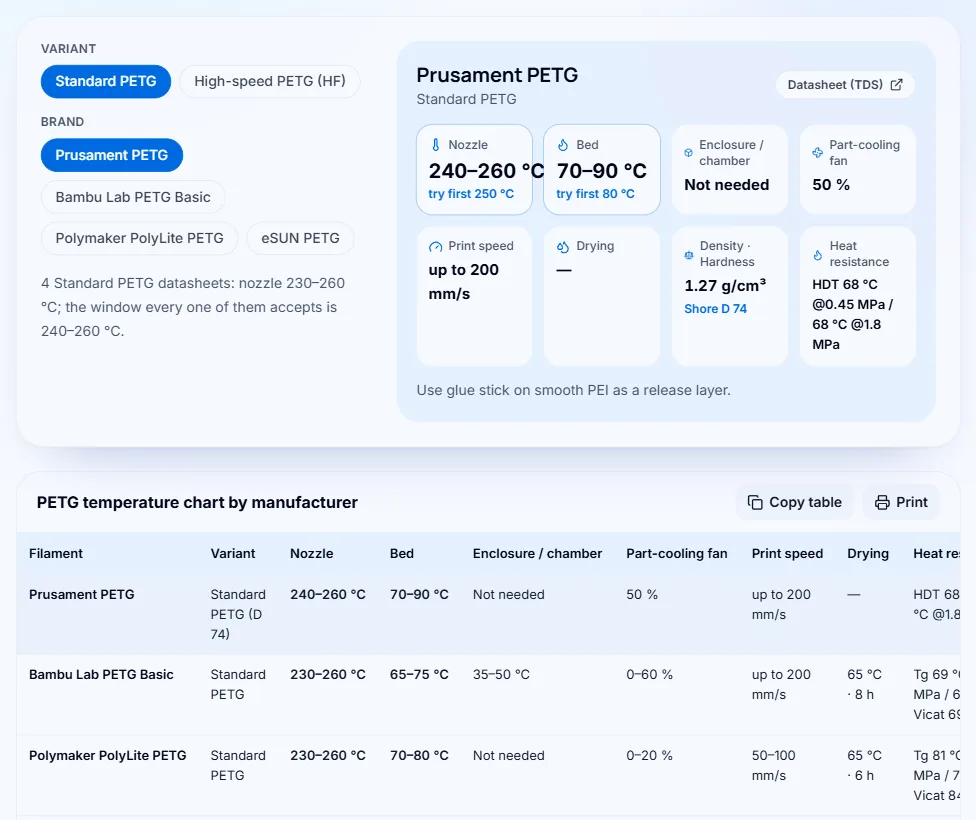
4 Standard PETG datasheets: nozzle 230–260 °C; the window every one of them accepts is 240–260 °C.
Bambu Lab PETG Basic
Standard PETG
- Nozzle
- 230–260 °C
- try first 245 °C
- Bed
- 65–75 °C
- try first 70 °C
- Enclosure / chamber
- 35–50 °C
- Part-cooling fan
- 0–60 %
- Print speed
- up to 200 mm/s
- Drying
- 65 °C · 8 h
- Density
- 1.25 g/cm³
- Heat resistance
- Tg 69 °C · HDT 71 °C @0.45 MPa / 68 °C @1.8 MPa · Vicat 69 °C
PETG temperature chart by manufacturer
| Filament | Variant | Nozzle | Bed | Enclosure / chamber | Part-cooling fan | Print speed | Drying | Heat resistance | Density |
|---|---|---|---|---|---|---|---|---|---|
| Prusament PETG | Standard PETG (D 74) | 240–260 °C | 70–90 °C | Not needed | 50 % | up to 200 mm/s | — | HDT 68 °C @0.45 MPa / 68 °C @1.8 MPa | 1.27 g/cm³ |
| Bambu Lab PETG Basic | Standard PETG | 230–260 °C | 65–75 °C | 35–50 °C | 0–60 % | up to 200 mm/s | 65 °C · 8 h | Tg 69 °C · HDT 71 °C @0.45 MPa / 68 °C @1.8 MPa · Vicat 69 °C | 1.25 g/cm³ |
| Polymaker PolyLite PETG | Standard PETG | 230–260 °C | 70–80 °C | Not needed | 0–20 % | 50–100 mm/s | 65 °C · 6 h | Tg 81 °C · HDT 78 °C @0.45 MPa / 75 °C @1.8 MPa · Vicat 84 °C | 1.25 g/cm³ |
| eSUN PETG | Standard PETG | 240–260 °C | 75–90 °C | — | 100 % | up to 150 mm/s | 60 °C · 8+ h | HDT 64 °C (load not stated) | 1.27 g/cm³ |
| Bambu Lab PETG HF | High-speed PETG (HF) | 230–260 °C | 65–75 °C | 35–50 °C | 0–60 % | up to 300 mm/s | 65 °C · 8 h | Tg 66 °C · HDT 69 °C @0.45 MPa / 62 °C @1.8 MPa · Vicat 70 °C | 1.28 g/cm³ |
Values copied from each manufacturer’s datasheet or product page, checked 2026-11. The label on your spool wins if it differs.
- Each row linked to its datasheet
- Standard and high-speed PETG
- Copy or print the table
- Fixes for stringing and sticking
PETG settings in three numbers
Five PETG datasheets and product pages, and the spread between what they recommend.
- 230–260 °Cnozzle range across all listed PETG
- 65–90 °Cbed range, about 20–30 °C warmer than PLA
- 0–100 %part fan: where the makers disagree most
Dialing in PETG temperature
PETG rewards patience: slightly slower, slightly hotter and with less fan than PLA.
Look up the spool
Choose standard or high-speed (HF) PETG, then the brand. Start at the suggested middle value for nozzle and bed.
Set the fan by the datasheet
Prusament asks for 50 %, Bambu Lab 0–60 %, Polymaker off to 20 %. Less fan gives stronger layers; more gives cleaner overhangs.
Protect the bed
PETG can bond to smooth PEI hard enough to tear the coating. Use glue stick as a release layer where the maker suggests it, or a textured plate.
What makes PETG different
PETG sits between PLA and ABS: tougher and more heat-resistant than PLA, without needing an enclosure.
PETG · Nozzle temperature by variant
- Standard PETG230–260 °C
- High-speed PETG (HF)230–260 °C
PETG · Bed temperature by variant
- Standard PETG65–90 °C
- High-speed PETG (HF)65–75 °C
PETG set-up at a glance
Nozzle: 240–260 °C suits every standard PETG listed
Prusament publishes 250 ± 10 °C, eSUN 240–260 °C, Bambu Lab and Polymaker 230–260 °C. The overlap is 240–260 °C, so 245–250 °C is a safe first try on an unknown spool.
Bed: 70–80 °C is the usual landing spot
Bambu Lab lists 65–75 °C, Polymaker 70–80 °C, Prusament 80 ± 10 °C and eSUN 75–90 °C. Hotter helps tall, wide parts stay down; it also makes the part harder to release.
Fan: the biggest disagreement
eSUN lists 100 %, Prusament 50 %, Bambu Lab 0–60 % and Polymaker off to 20 %. Treat the brand’s own value as the start and change it by what you see: weak layers mean less fan, sagging overhangs mean more.
Heat resistance is a step up from PLA
Heat deflection at 1.8 MPa is 68 °C for Prusament and Bambu PETG Basic and 75 °C for PolyLite PETG, versus 52–58 °C for the PLAs in our PLA chart. Fine for a car interior in mild weather, not for engine bays.
High-speed PETG trades heat resistance for speed
Bambu PETG HF is rated up to 300 mm/s against 200 mm/s for PETG Basic, at the same temperatures. Its heat deflection at 1.8 MPa is lower, 62 °C instead of 68 °C.
Dry it hotter than PLA
Bambu Lab and Polymaker dry PETG at 65 °C (8 h and 6 h), eSUN at 60 °C for 8 hours or more. Wet PETG pops, strings and leaves a rough, foggy surface.
PETG problems and their fixes
PETG’s classic issues are stringing, blobs on the nozzle and sticking too well. Most trace back to heat, fan or moisture.
 01
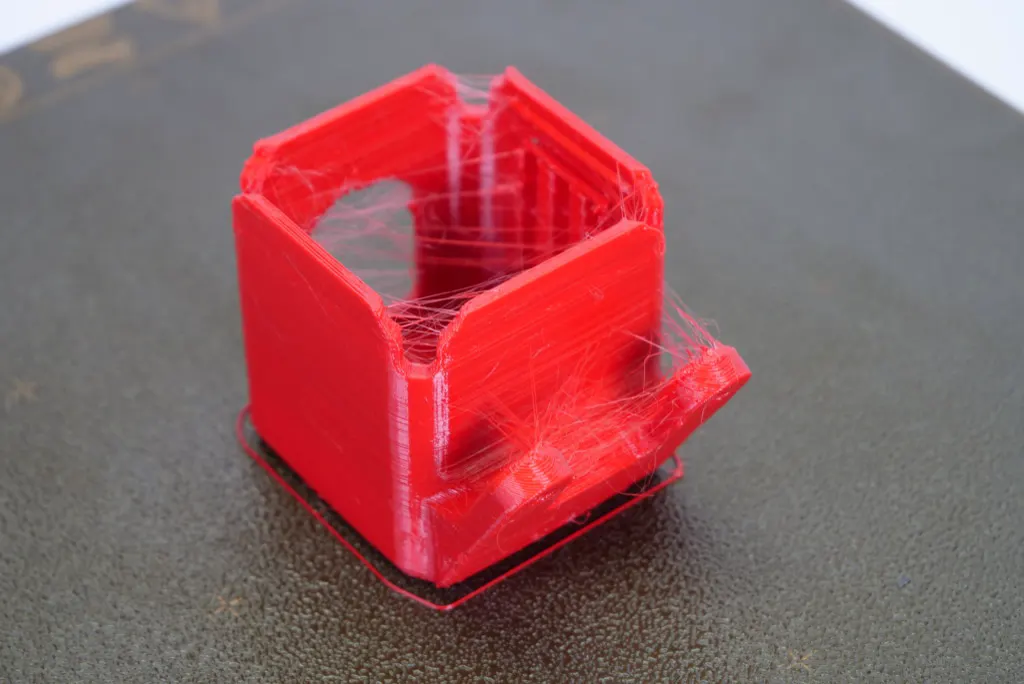
Heavy stringing
Usually because: PETG oozes more than PLA, and wet PETG oozes far more.
Fixes
- Dry the spool at 65 °C (Bambu Lab: 8 h).
- Lower the nozzle 5 °C toward the bottom of the range.
- Tune retraction and travel speed; avoid crossing perimeters.
 02
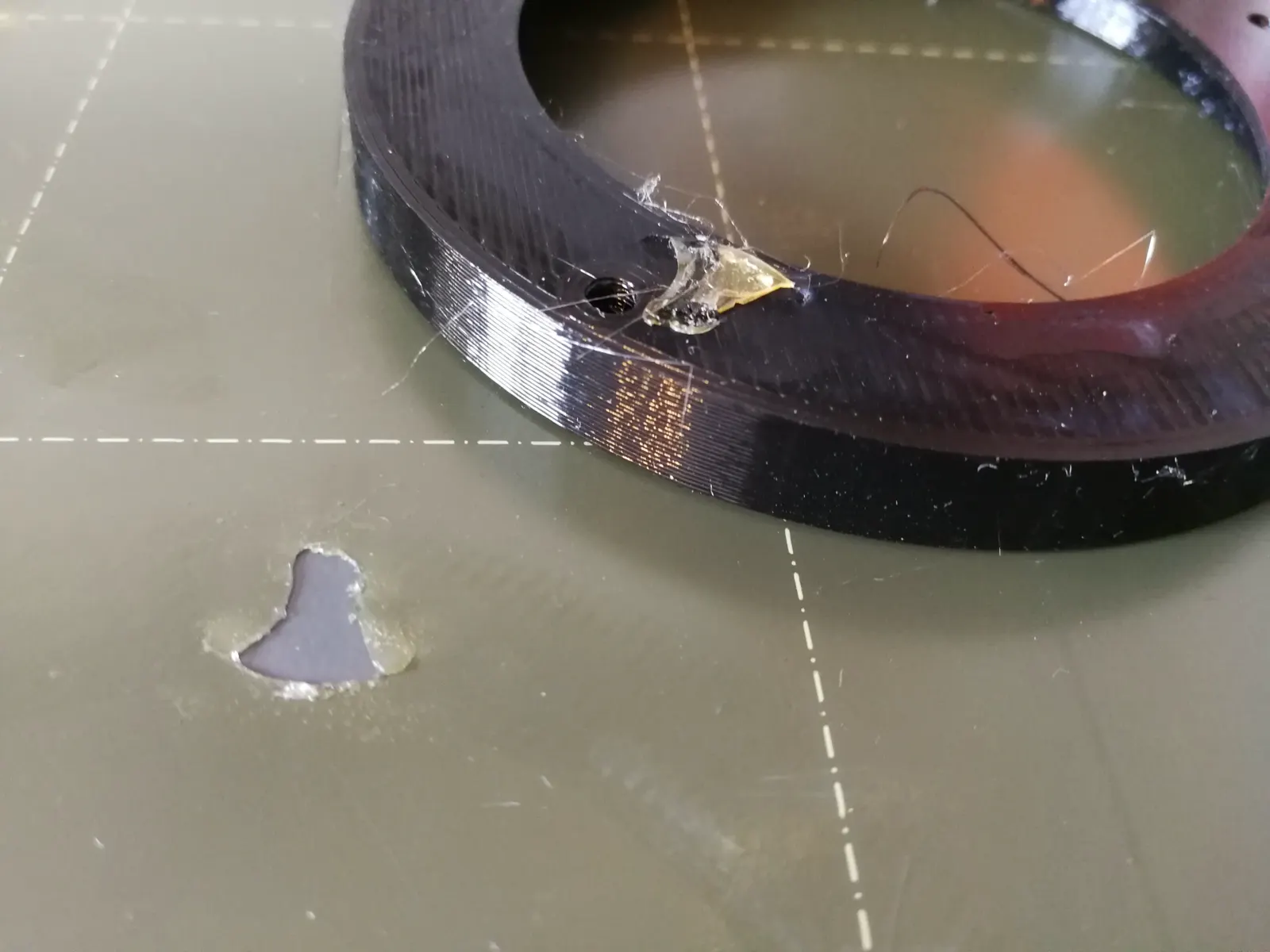
Print welded to the plate
Usually because: PETG bonds strongly to clean smooth PEI and glass.
Fixes
- Use glue stick as a release layer (Prusament recommends it on smooth PEI).
- Switch to a textured PEI plate.
- Let the bed cool fully before removing the part.
 03
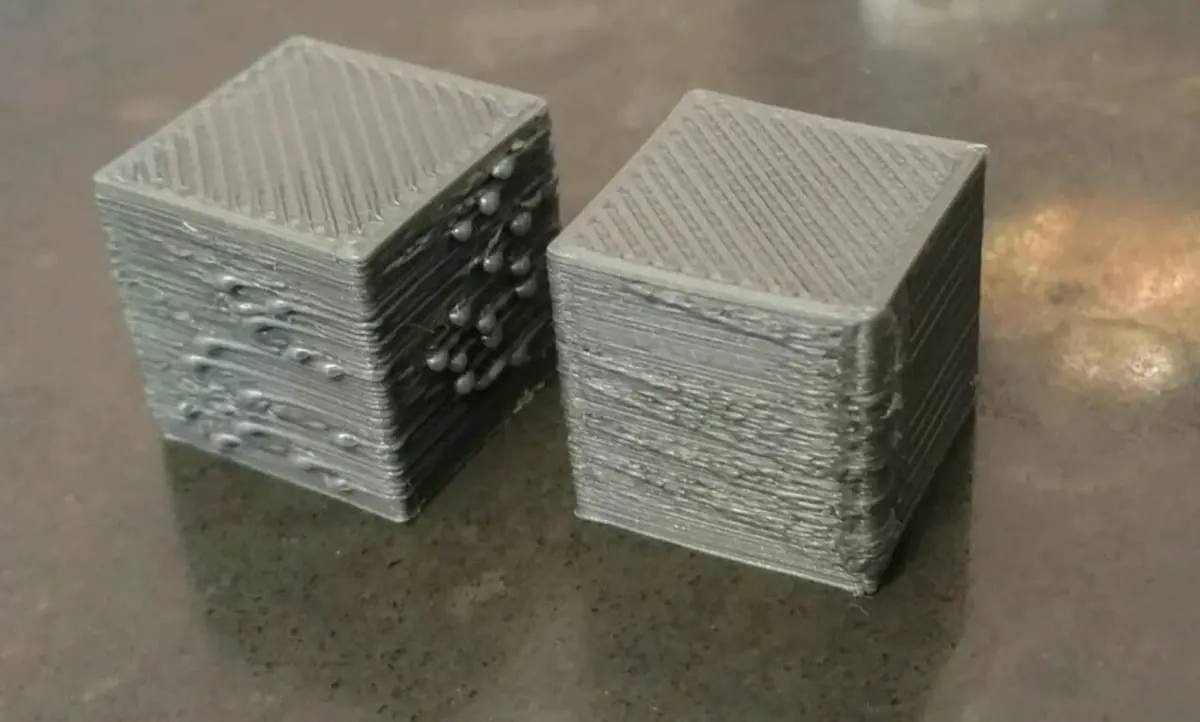
Blobs and burnt bits on the part
Usually because: Plastic builds up on the nozzle and drops off.
Fixes
- Raise the first-layer Z a little; PETG dislikes being squished.
- Clean the nozzle and fit a silicone sock.
- Lower the nozzle temperature by 5 °C.
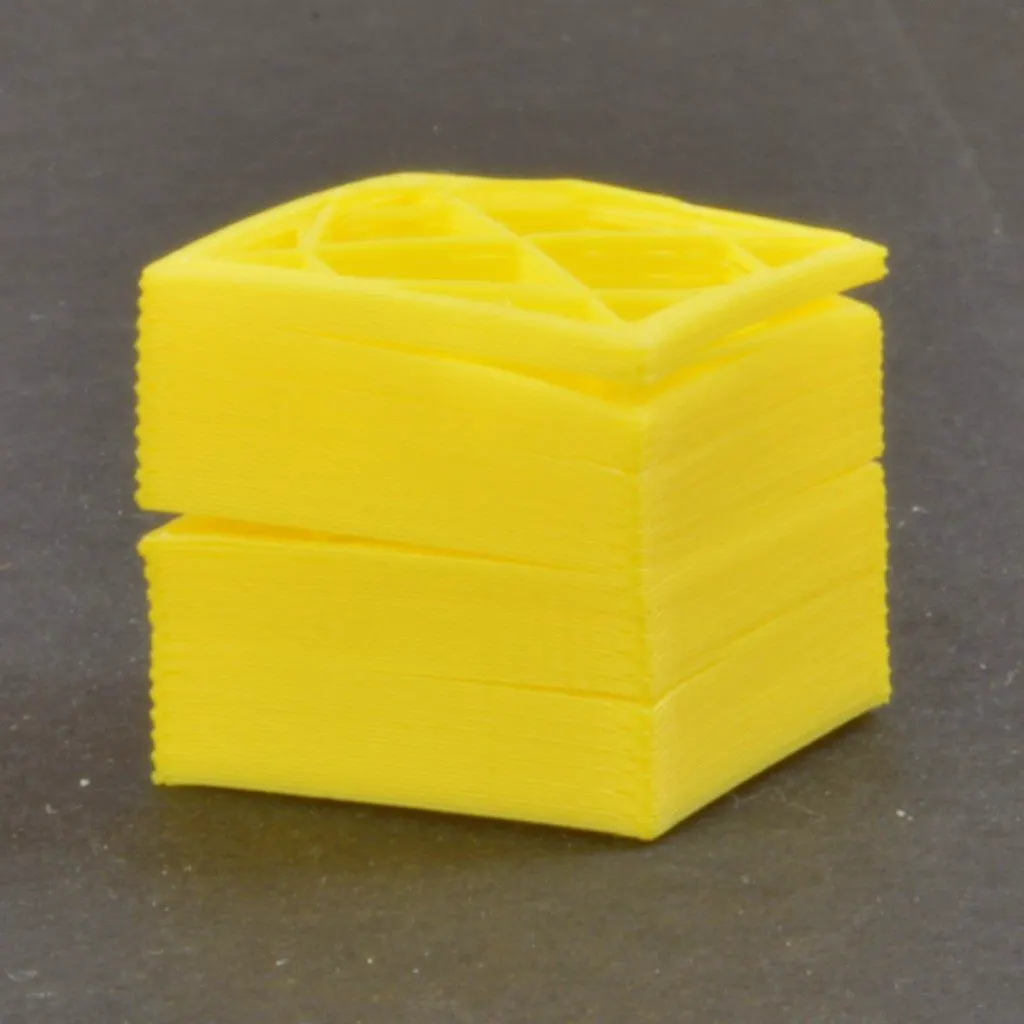 04
Layers split or snap easily
Usually because: Too much cooling, or too cold for the speed.
Fixes
- Reduce the part fan toward the maker’s lower value.
- Move the nozzle toward the top of its range.
- Slow down, or use the HF grade for fast printers.
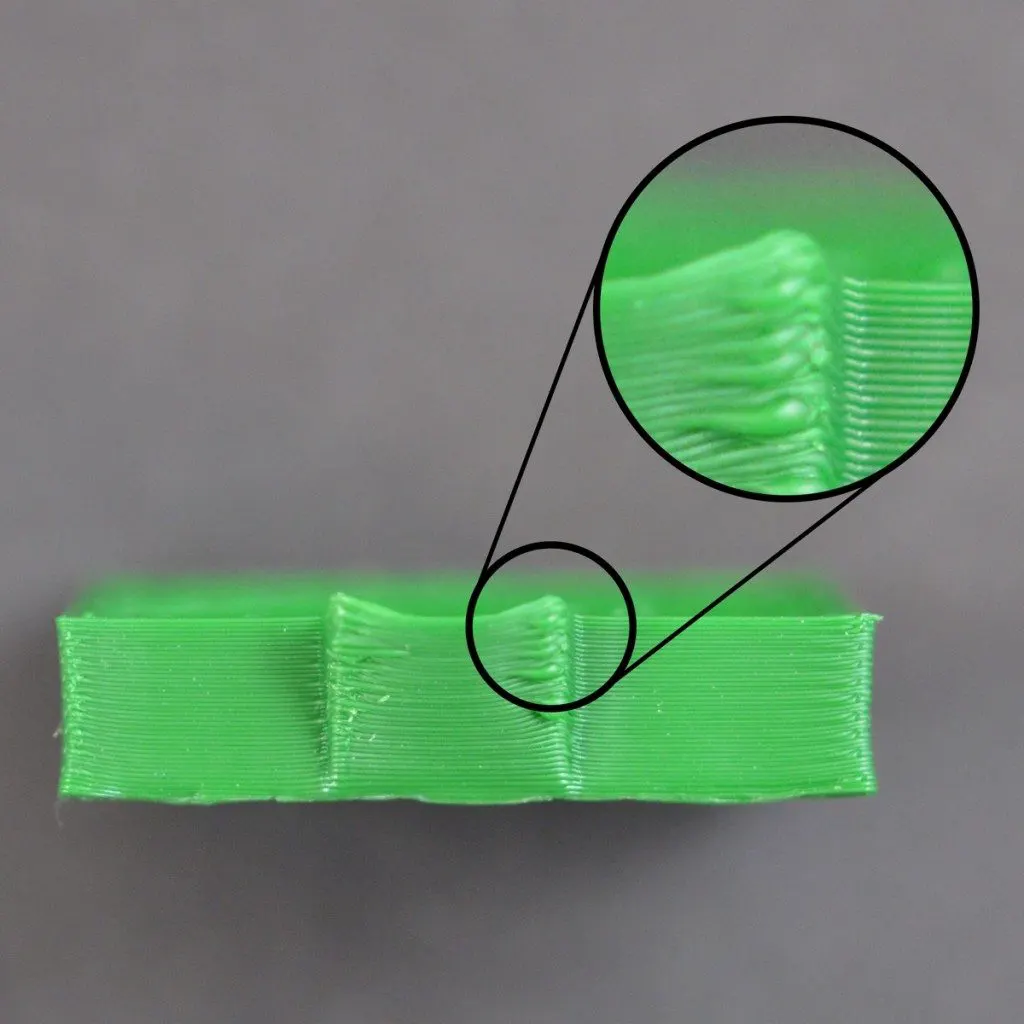 05
Corners lift on large parts
Usually because: Bed too cool or a draft across the plate.
Fixes
- Raise the bed toward 80 °C within the listed range.
- Add a brim on long, thin parts.
- Keep the printer out of drafts; a closed door helps.
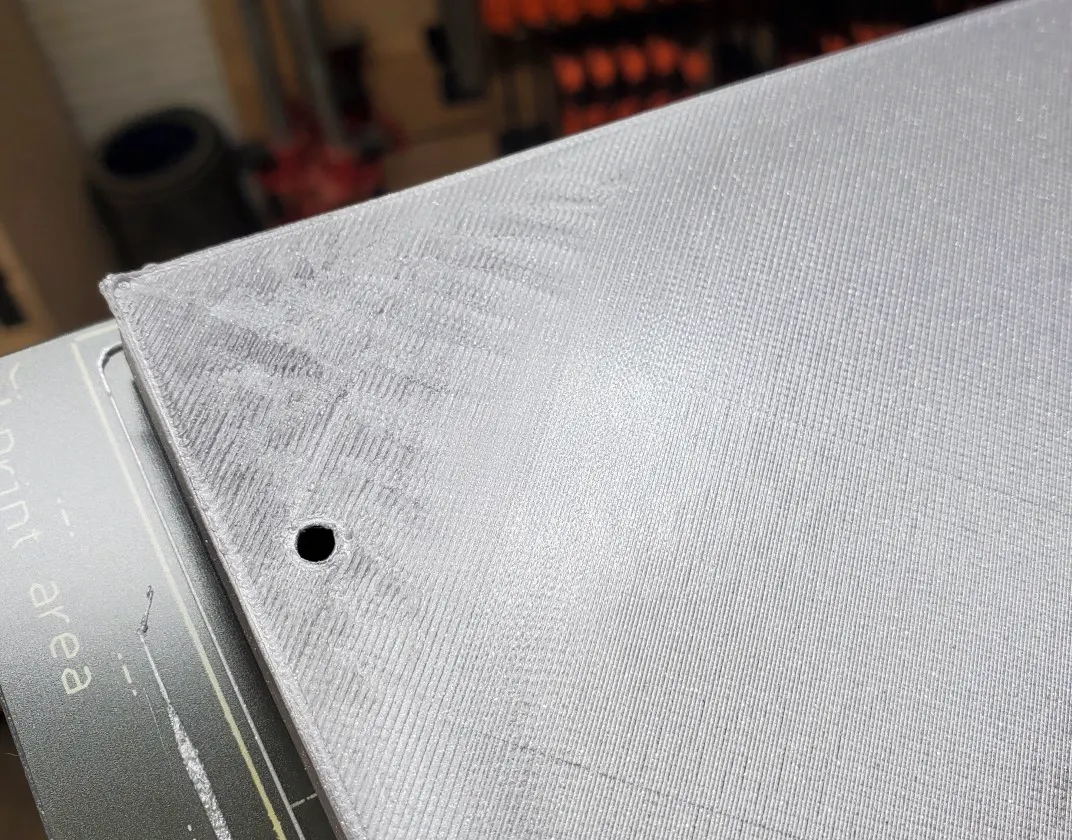 06
Rough or cloudy surface
Usually because: Moisture boiling in the nozzle, or overheating.
Fixes
- Dry the filament and store it with desiccant.
- Print a temperature tower and pick the lowest clean block.
- Check the slicer is not using a PLA profile.
- manufacturer documents
- 5manufacturer documents
- 4 brands: Prusament · Bambu Lab · Polymaker · eSUN
- 4 technical data sheets · checked 2026-11
Sources for the PETG chart
Read from these manufacturer documents on 2026-11-23. Where a product page and its datasheet differ, the note in the picker says which one is shown.
- Prusament PETG — Datasheet (TDS)
- Bambu Lab PETG Basic — Datasheet (TDS)
- Polymaker PolyLite PETG — Datasheet (TDS)
- eSUN PETG — Official product page
- Bambu Lab PETG HF — Datasheet (TDS)
What this PETG chart gives you
The PETG settings you need before the first layer, without forum guesswork.
One row per datasheet
Nothing is averaged across brands. Each value links to the PDF or product page it came from.
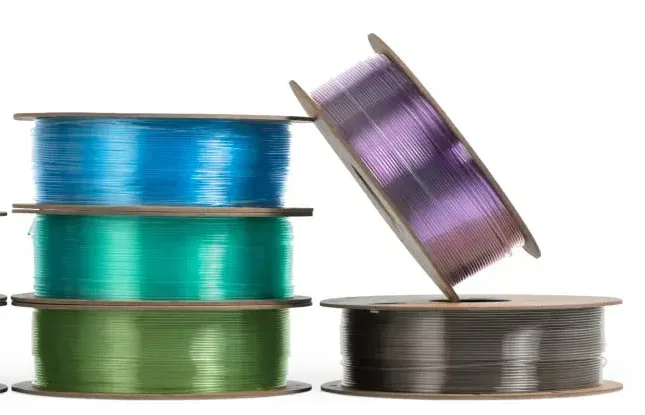
Standard vs high-speed PETG
HF grades are listed separately, because their speed limit and heat resistance differ from standard PETG.
The overlap, worked out
The picker shows the nozzle window every listed brand accepts, handy for a spool whose label is long gone.
Fan advice in context
Fan ranges from 0 to 100 % between makers, so the chart shows each one rather than pretending there is a single right answer.
Heat deflection, 0.45 MPa
60 °CPLA78 °CPETG103 °CABS/ASALowest to highest HDT published on the datasheets in the four charts.
Heat deflection with the load
HDT values carry their test load (0.45 or 1.8 MPa), so you compare like with like against PLA and ABS.
Take it to the workshop
Copy the table into a spreadsheet or print it with the source links underneath.
PETG print temperature FAQ
Common PETG questions, answered from the datasheets.
More ways to work with your 3D files
View, convert, or make a model from scratch.
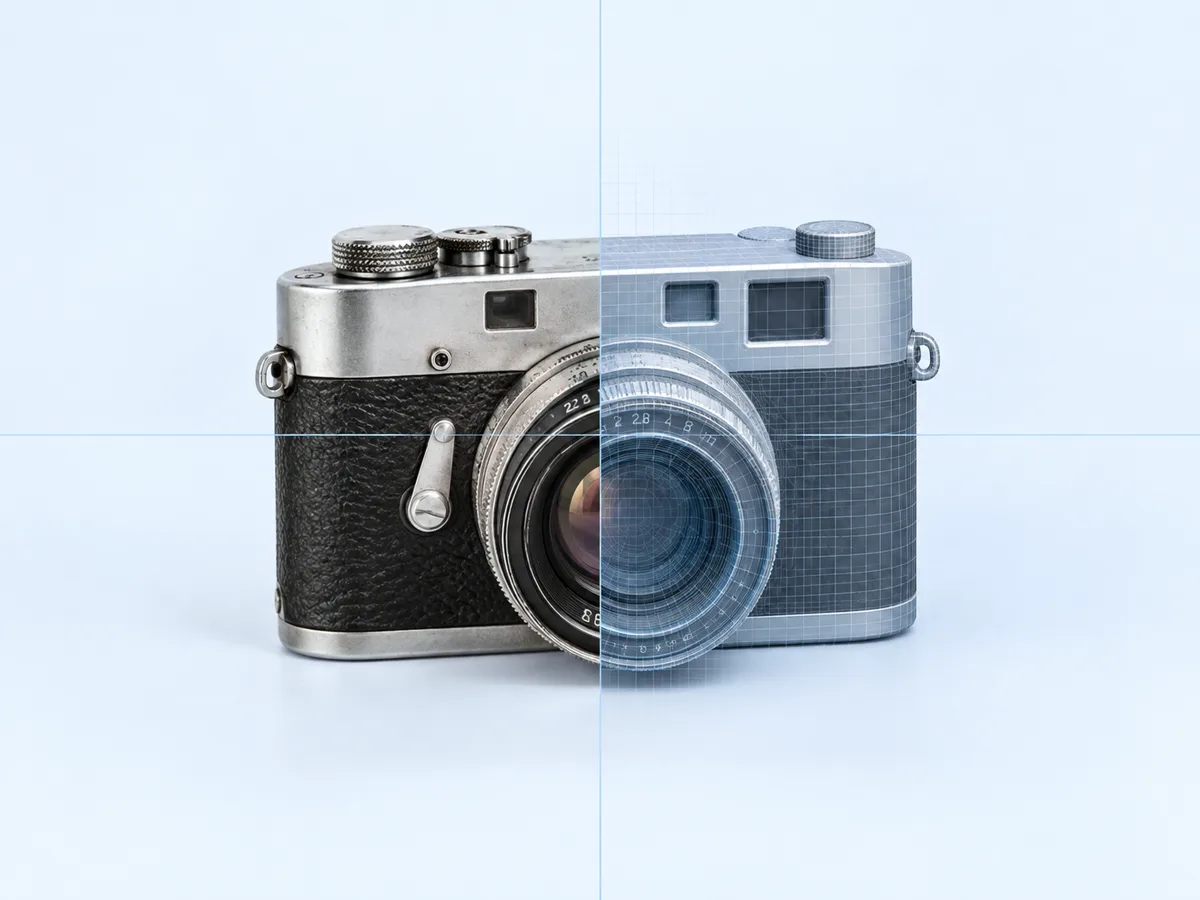
PETG dialed in? Give it a model worth printing.
Generate a printable 3D model from a photo, export the STL and print a tough part in PETG.