Gridfinity Generator
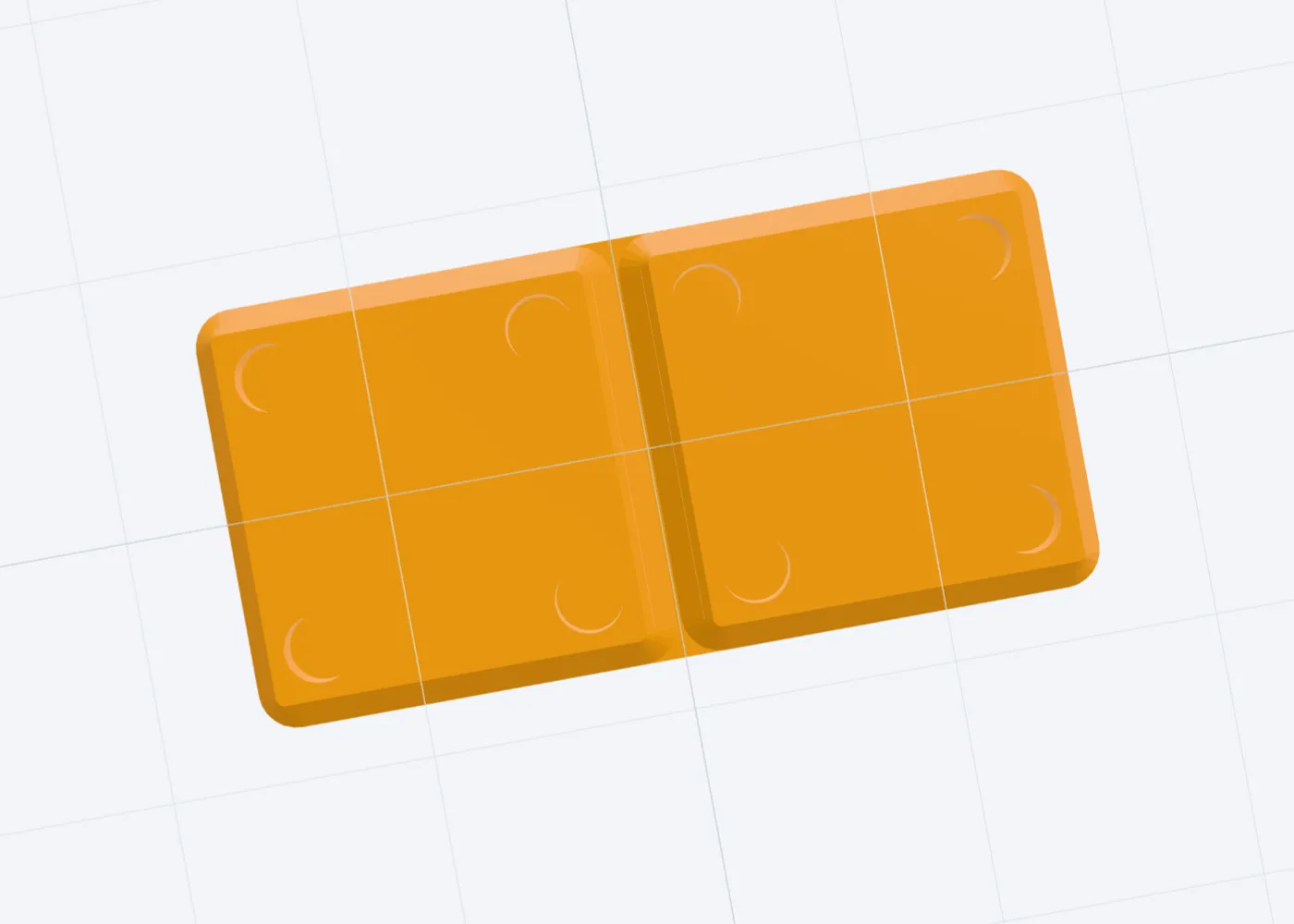
Gridfinity bin with 2 feet: print upright, no supports.
Ready to download — built to the Gridfinity specification.
Print tips
Print upright, no supports
All overhangs are 45° or gentler. 0.2 mm layers, 2 walls, 10–15 % infill.
gridfinity-rebuilt-openscad ↗Magnets: 6 × 2 mm
Holes are 6.5 × 2.4 mm. Press-fit, or glue if your printer runs holes slightly large.
Gridfinity specification ↗
Presets
Runs in your browser — your files are never uploaded.
- Nothing uploaded
- 42 × 42 × 7 mm grid
- Bins + baseplates
- STL + 3MF
The Gridfinity standard in three numbers
The dimensions every Gridfinity part shares, built into the generator.
- 42 mmgrid pitch — each bin foot is 41.5 mm, leaving a 0.5 mm gap
- 7 mmheight unit — a 3-unit bin is 21 mm plus the stacking lip
- 6 × 2 mmmagnets in 6.5 mm × 2.4 mm holes, four per grid cell
How to make Gridfinity bins
Size it, divide it, print it — it fits every standard baseplate.
Choose bin or baseplate
Start from a preset or set the grid units across (X) and deep (Y). One unit is 42 mm.
Set height and compartments
Pick the height in 7 mm units, split the bin with dividers, and switch magnet holes, the label tab and the stacking lip on or off.
Download and print
Save STL or 3MF and print it upright, as exported. No supports are needed for any option.
The 42 mm grid and the stepped base profile
Why any Gridfinity bin fits any Gridfinity baseplate.
A 42 mm grid
Every bin and baseplate is a whole number of 42 mm cells. The 0.5 mm gap between feet absorbs print tolerance.
A stepped foot
Each cell has its own foot with two 45° chamfers, which self-centres in the baseplate socket.
7 mm height units
Heights come in 7 mm steps, so bins of the same unit count line up in a drawer.
Lip and magnets are optional
The stacking lip lets bins stack; magnets hold bins in a magnet baseplate when a drawer slams.
Gridfinity dimensions this generator uses
Gridfinity is Zack Freedman’s open modular storage system, released under the MIT licence. These values follow the community specification and the widely used gridfinity-rebuilt-openscad library.
| Part | Dimension | Note |
|---|---|---|
| Grid pitch | 42 × 42 mm | Bins are 42 × n − 0.5 mm wide so neighbours never touch. |
| Height unit | 7 mm | Bin height = units × 7 mm, measured without the stacking lip; the base takes the first unit. |
| Bin base profile | 0.8 / 1.8 / 2.15 mm | Bottom up: 45° chamfer, vertical, 45° chamfer. Top 41.5 mm square, 3.75 mm corner radius. |
| Baseplate profile | 0.7 / 1.8 / 2.15 mm | The matching socket, 4.65 mm tall, 42 mm pitch, 4 mm outer corner radius. |
| Stacking lip | 0.7 / 1.8 / 1.9 mm | Mirrors the base so a bin stacks on another; sits on a 45° support. |
| Magnet holes | 6.5 × 2.4 mm, 13 mm off centre | For 6 × 2 mm neodymium magnets, four per cell (8 mm from the cell edge). |
Two small departures, both for printability: the stacking lip ends in a 0.4 mm flat instead of a knife edge, and baseplate ridges keep a 0.2 mm flat on top. Neither changes the fit. Screw holes, half-grid and weighted baseplates are not included.
Sources (checked 2026-11-24):Gridfinity specification (gridfinity.xyz)Gridfinity wiki — origins, MIT licencegridfinity-rebuilt-openscad (kennetek, MIT)Zack Freedman — “Gridfinity: Your Ultimate Modular Workshop is FREE!”
Gridfinity in real drawers
Bins and baseplates printed and used by other makers.
 Reference example
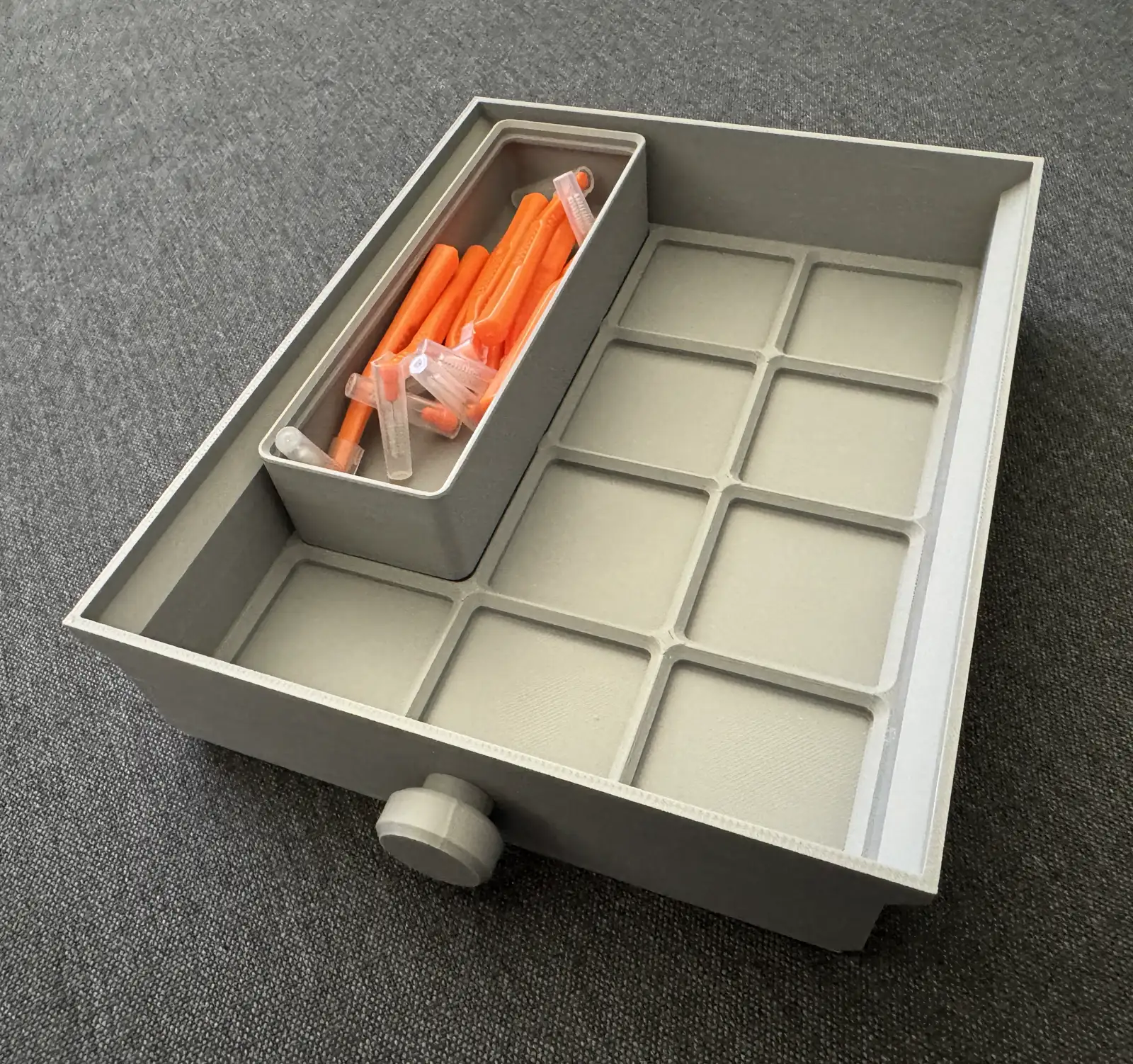
Baseplate and bin in a drawervia commons.wikimedia.org · Sandstein, CC0 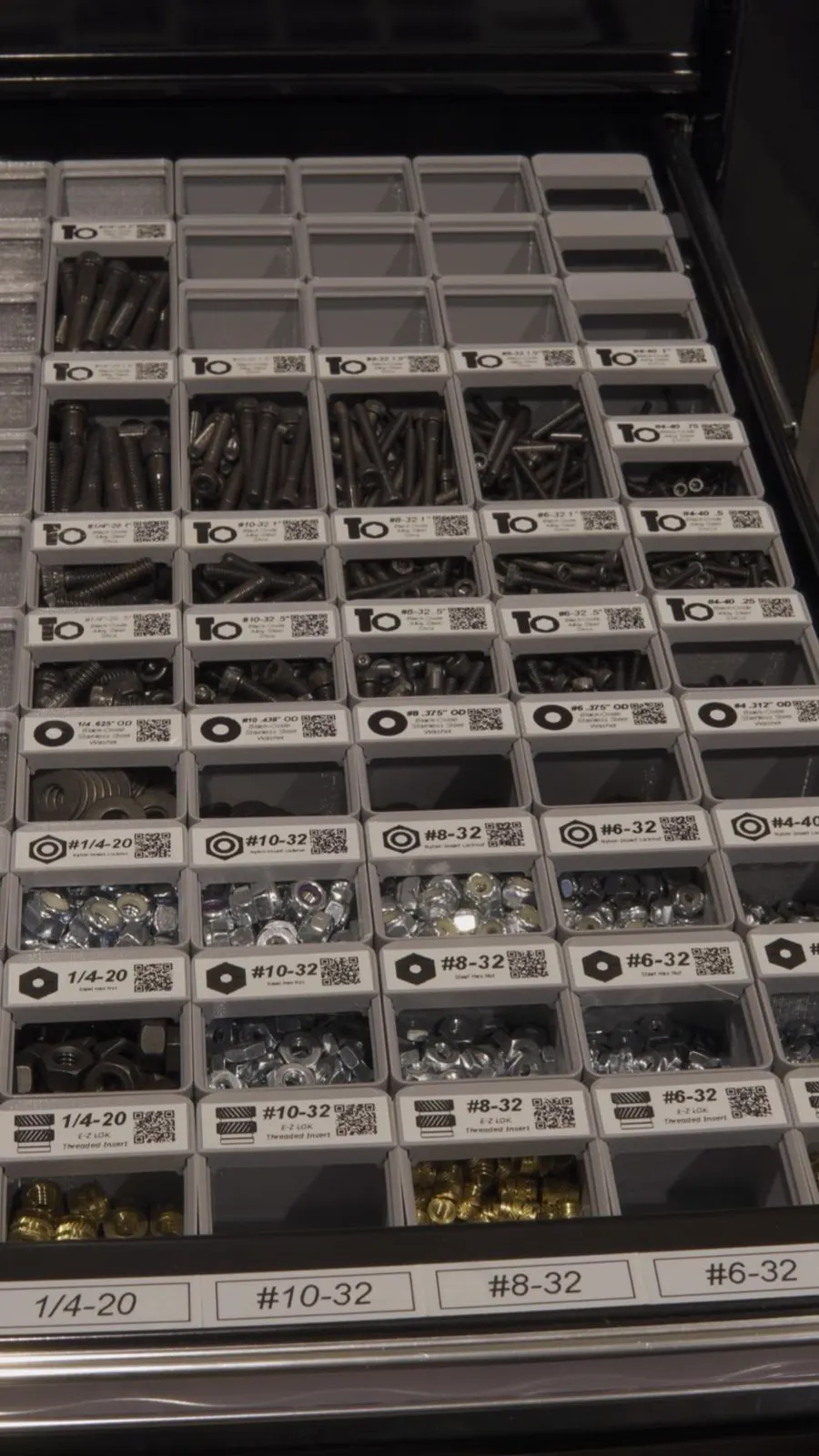 Reference example
Labelled bins for hardwarevia printables.com · Kyle Warren, CC BY 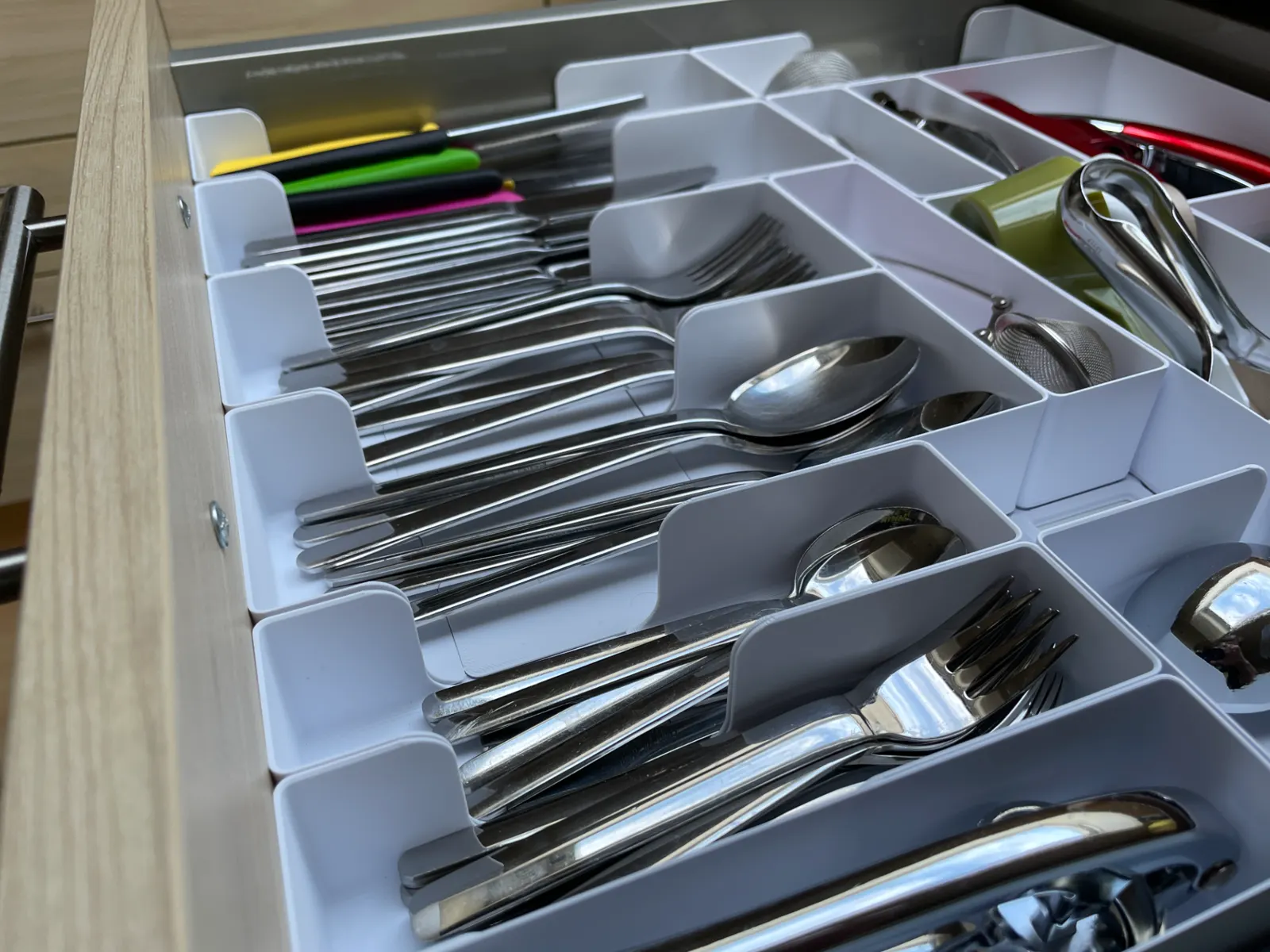 Reference example
Kitchen drawer organiservia makerworld.com · Trinitor, CC BY-SA 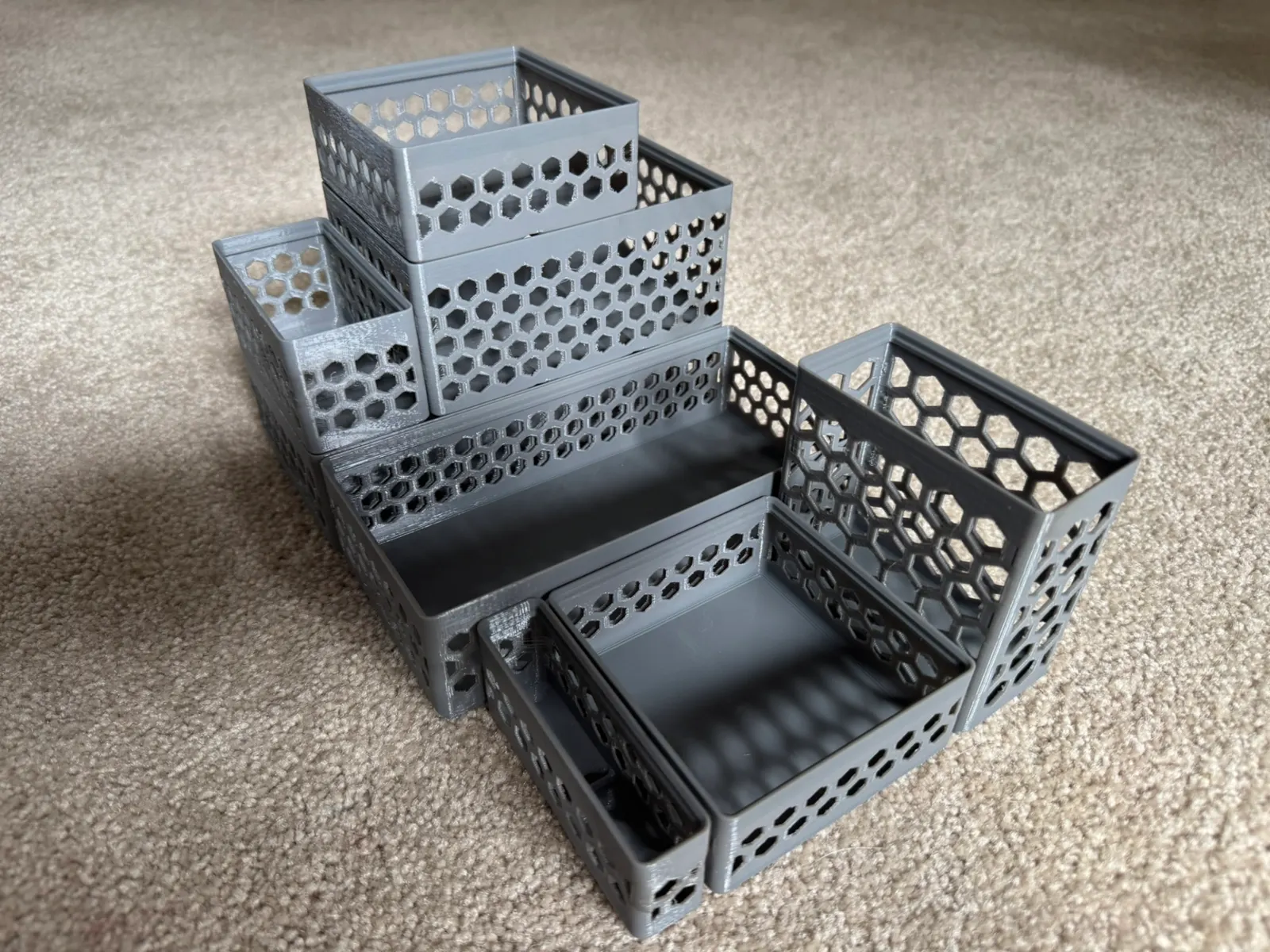 Reference example
Stacked bins of mixed sizesvia makerworld.com · ostat, CC BY
Reference examples by other makers, shown to illustrate printed Gridfinity parts. They were not made with this tool; licences and authors are listed with each photo.
Gridfinity parts made with this generator
Real outputs of the tool above, rendered in the preview.
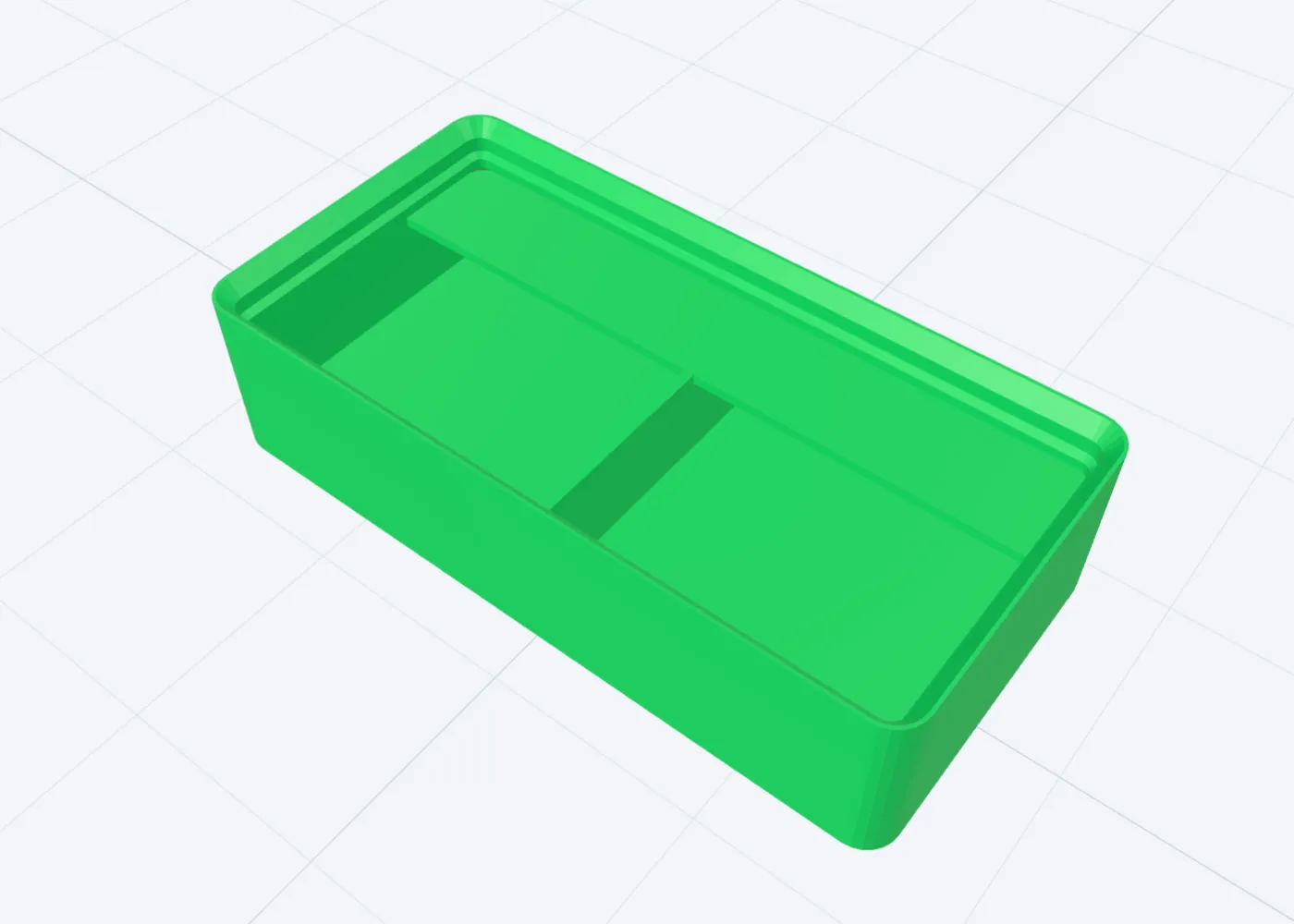
2 × 1 × 3 bin, 2 compartments
The default: two compartments, label tab and stacking lip.
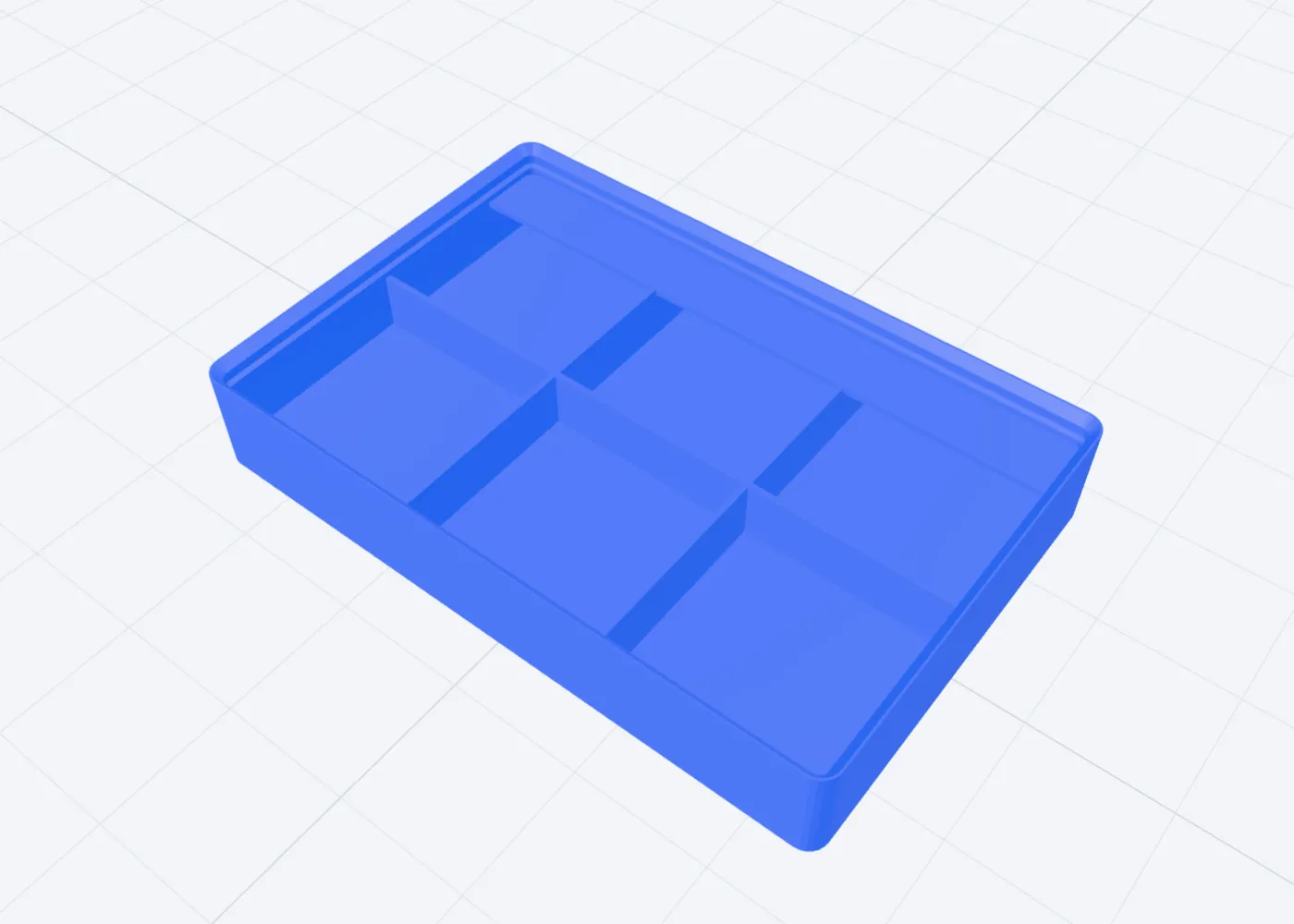
3 × 2 small-parts bin
3 × 2 grid, 3 × 2 compartments for screws and nuts.
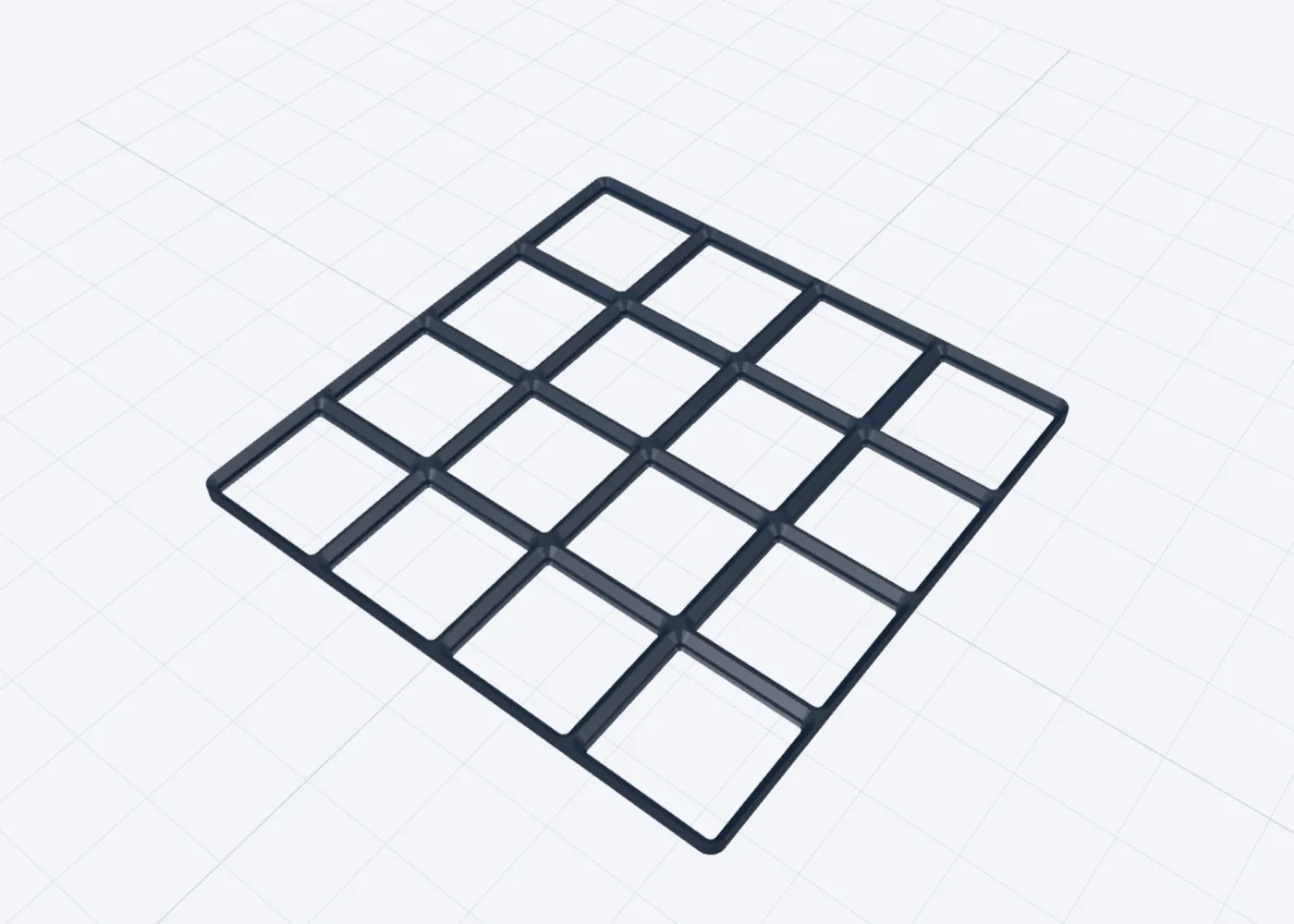
4 × 4 baseplate
A 168 mm square baseplate with sixteen sockets.
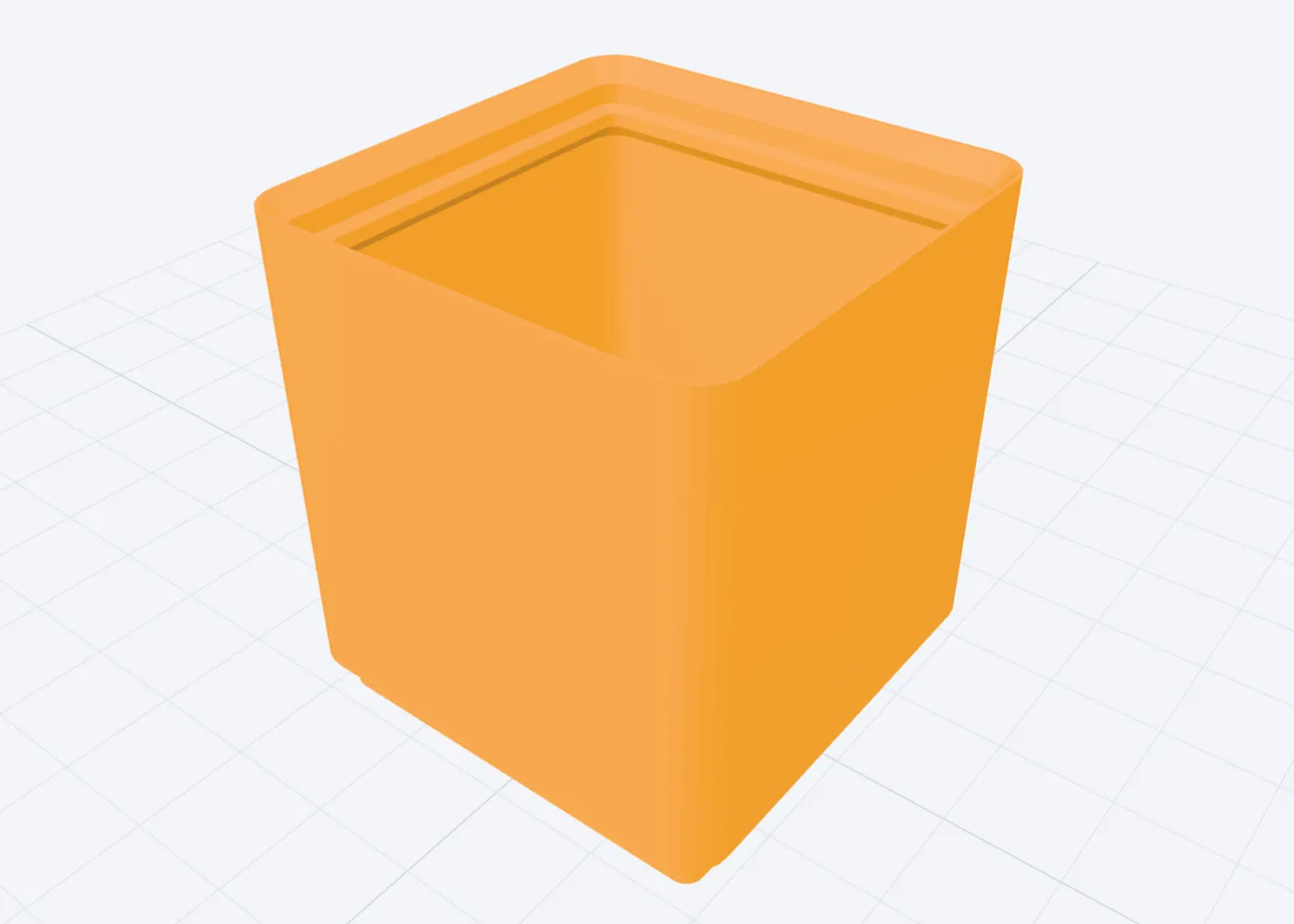
Tall 1 × 1 cup
Six units tall with no dividers — pens, brushes, screwdrivers.
Why use this Gridfinity generator
Exact standard dimensions, no OpenSCAD or Fusion 360 needed.
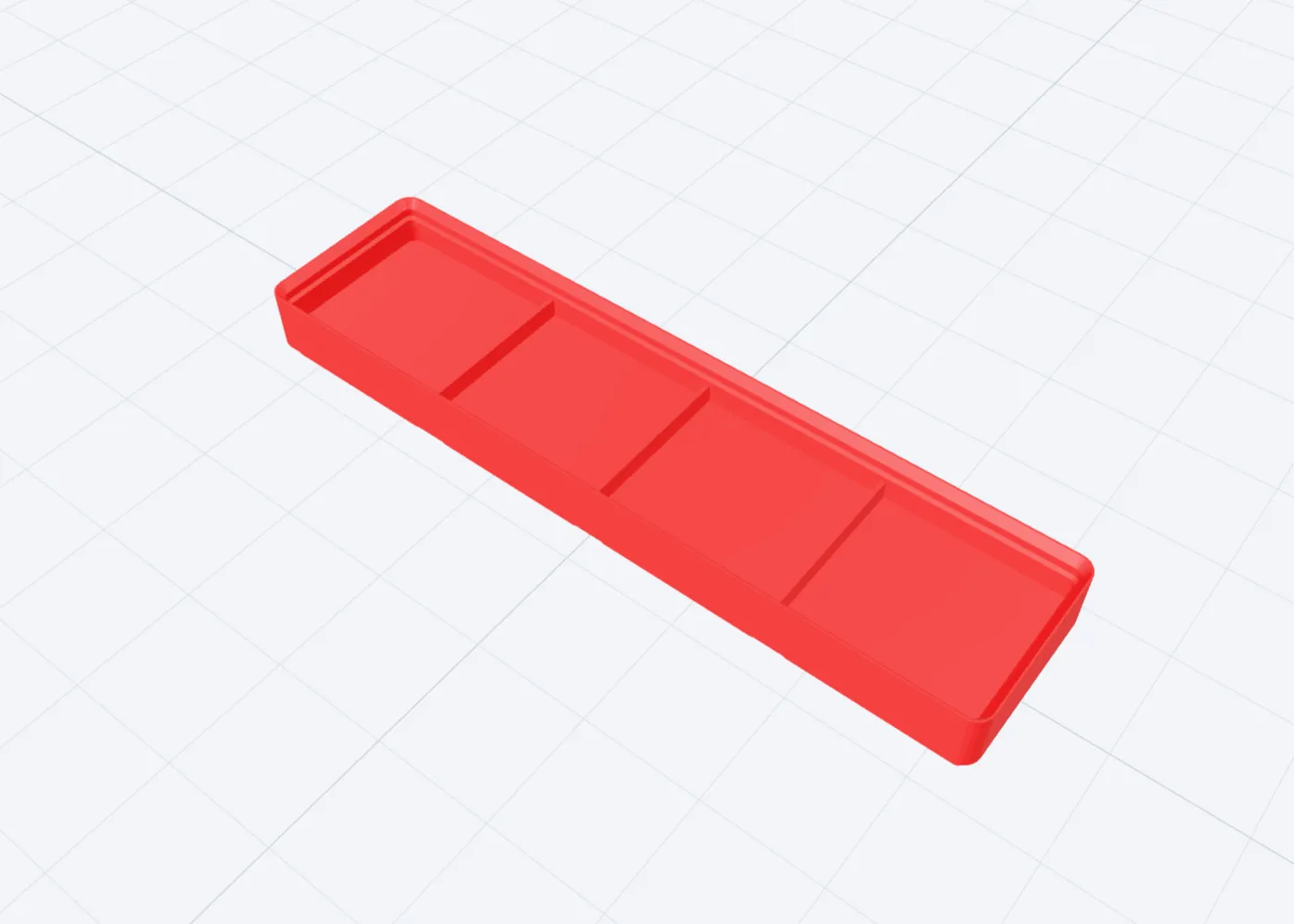
Any grid size
Bins and baseplates from 1 × 1 to 8 × 8 units. The info panel shows the outer size and each compartment in millimetres.
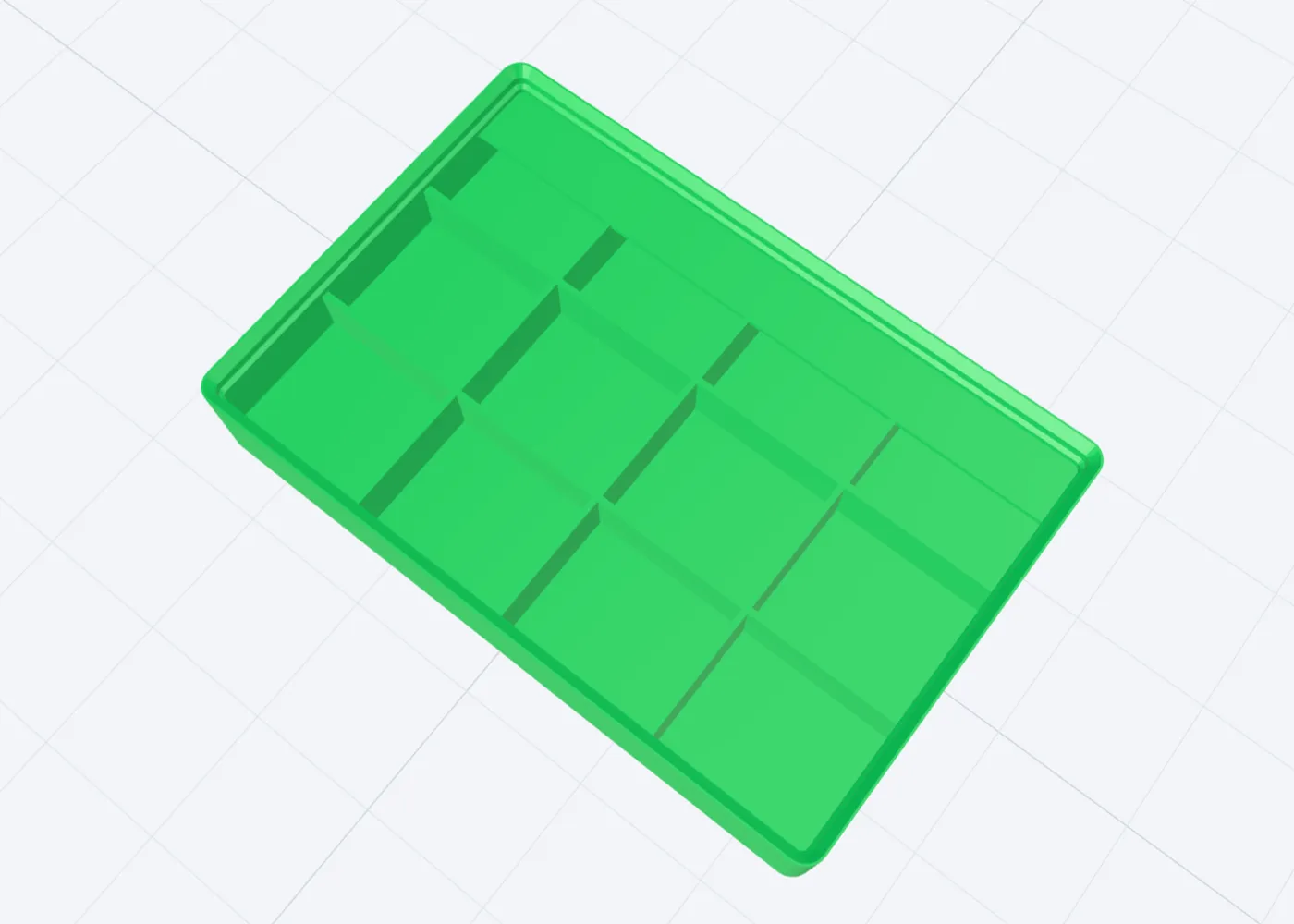
Compartments in both directions
Up to 8 × 8 dividers, evenly spaced, 1.2 mm thick — sized to the inside of the wall, not the outside.
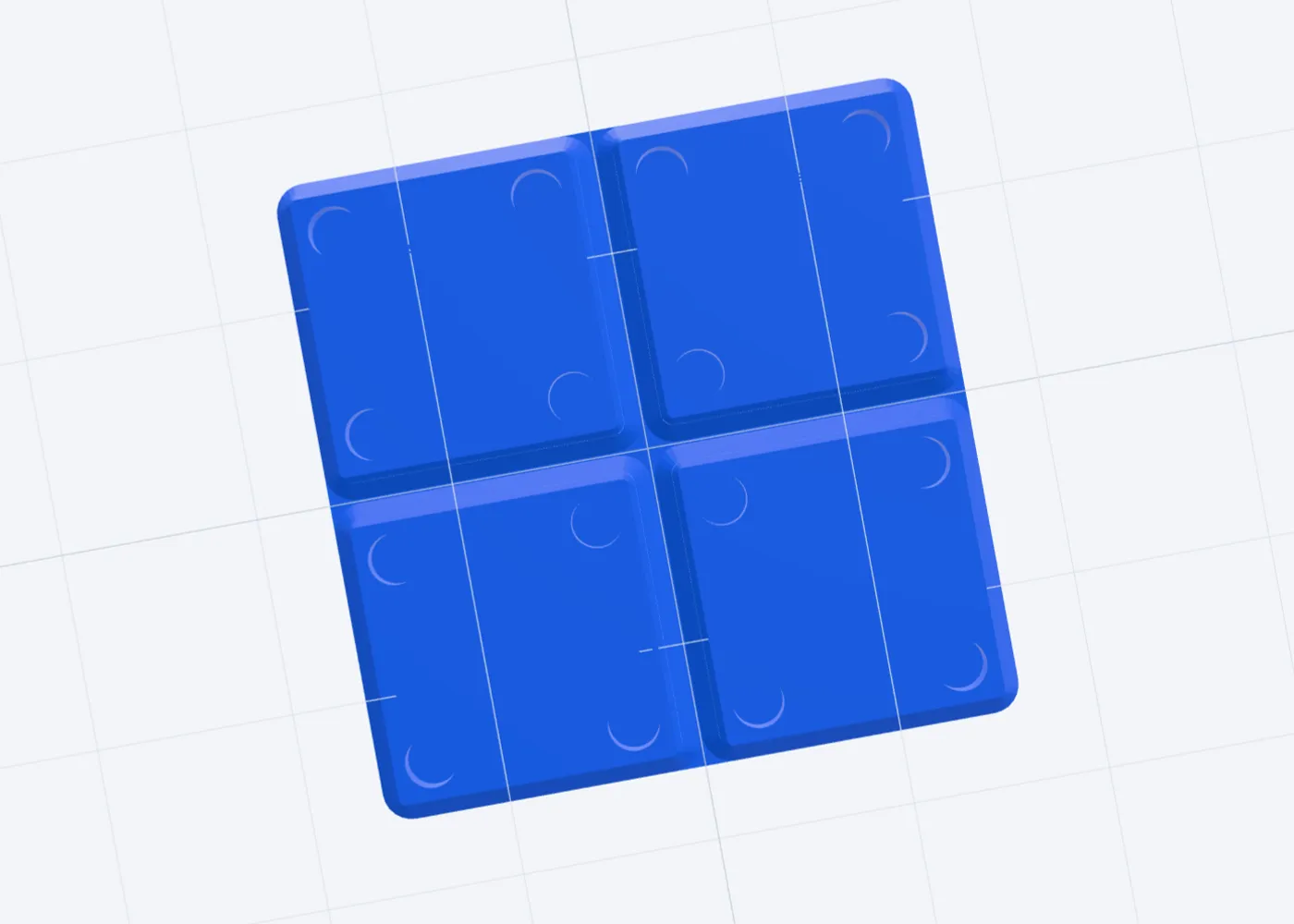
Magnet holes
Four 6.5 mm pockets per cell, 2.4 mm deep, for 6 × 2 mm magnets — press them in after printing.
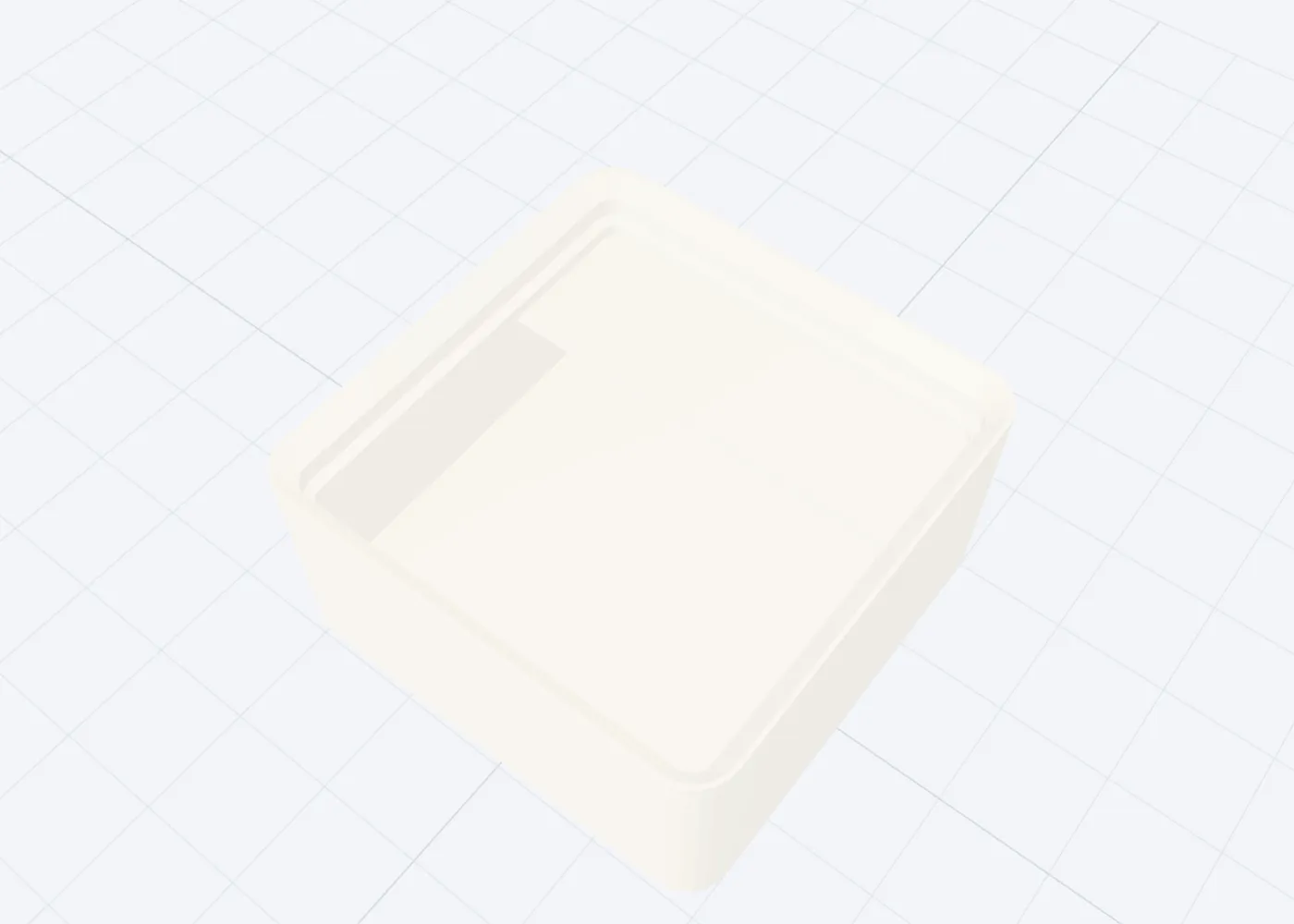
Label tab and stacking lip
A 36° self-supporting label shelf along the back wall, and the standard lip so bins stack.
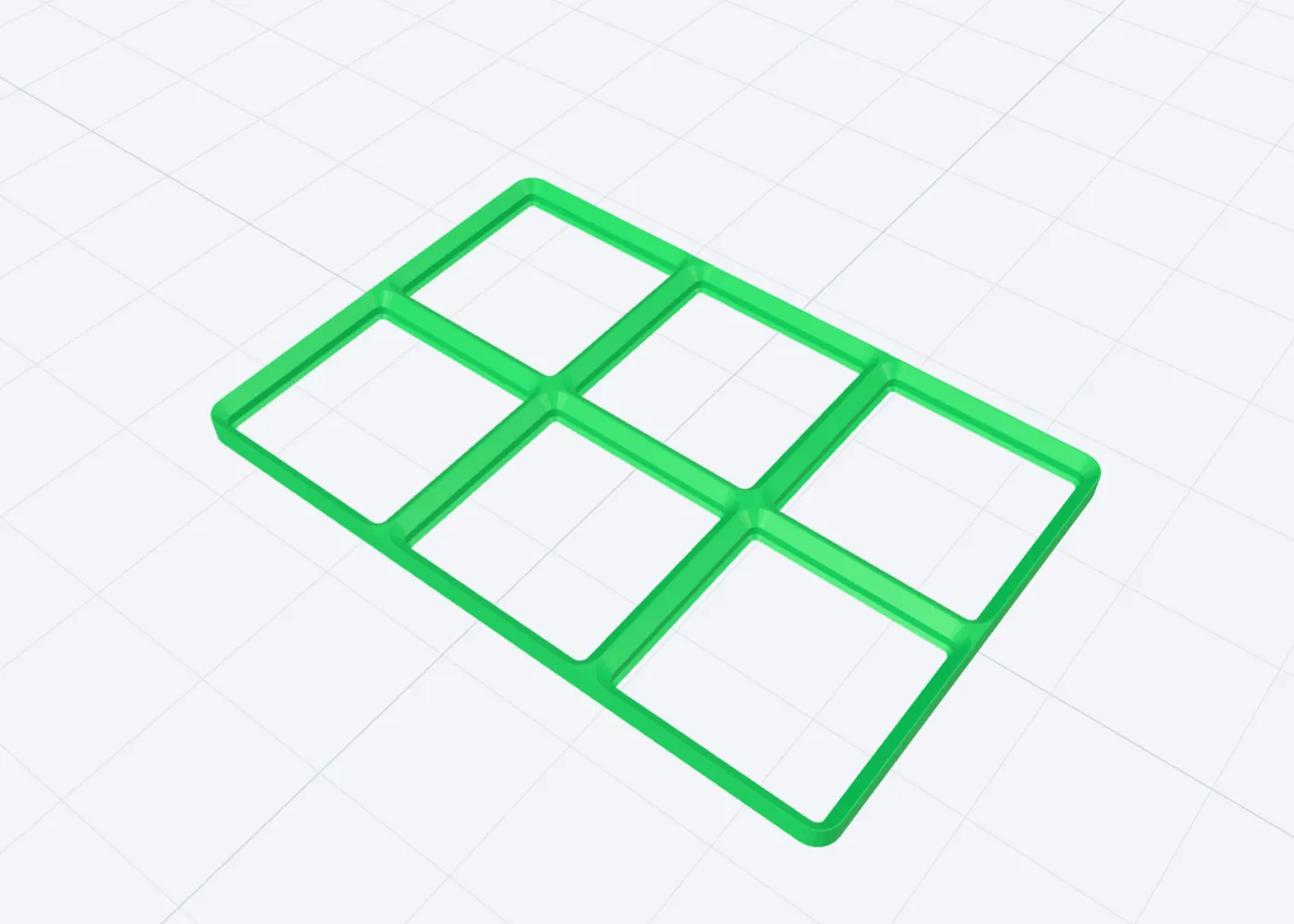
Matching baseplates
Generate the socket grid for a drawer in one piece, or print several smaller plates and lay them side by side.
Private by design
The parts are computed in your browser — no upload, no queue, no account for the download.
Gridfinity generator FAQ
More ways to work with your 3D files
View, convert, or make a model from scratch.
Coaster Generator
Design custom 3D printed coasters with text or patterns.
Vase Generator
Create twisted, ribbed vases for spiral vase mode.
STL viewer
Open STL, 3MF, OBJ or GLB and measure size, area and volume.
Nameplate Generator
Design a printable name plate and download STL.
QR Code to STL
Turn a link or text into a 3D printable QR code plate.
Need an insert shaped like your tool?
Photograph the object and Kairo3D’s AI image to 3D generator turns it into a model you can build a holder around.