Coaster Generator
Plain plate: add a rim, pattern or text for a second colour.
Ready to download — every body is a closed shell.
Print tips
Hot drinks: PETG or ASA
PLA softens around 55–60 °C. A coaster for coffee or tea lasts longer in PETG or ASA.
Prusa KB — PETG ↗Colour change at the plate top
Add a pause / M600 at the height shown above the downloads to get a two-colour coaster.
Prusa KB — colour change ↗
Presets
Runs in your browser — your files are never uploaded.
- Nothing uploaded
- Round · square · hexagon
- Two colours, one swap
- STL + 3MF
A custom coaster in under a minute
Every number below is a real default of the coaster generator.
- 100 mmdefault diameter — wide enough for most mugs and wine glasses
- 6raised patterns: hexagons, dots, rings, sunburst, waves or none
- 1filament swap at the top of the plate gives a two-colour coaster
How to make a 3D printed coaster
Three steps from an idea to a set on the table.
Pick a preset or a shape
Start from Honeycomb, Name, Sunburst, Waves or Hex tile, or choose round, square or hexagon and set the size in millimetres.
Add a pattern or text
Choose a raised pattern, type one or two lines of text, and set how tall the relief stands. The pattern keeps clear of the text by itself.
Download and print
Save one STL or 3MF for a single colour or a filament swap, or the plate and the raised top as two STLs for a multi-material printer.
Plate, rim, relief and recesses in cross-section
What each setting changes, drawn to the default proportions.
The plate carries the load
A 4 mm solid plate is the first colour. Its top face is where the second colour starts.
Rim and relief share one height
The rim, pattern and text all rise by the same amount, so a glass rests on all of them instead of rocking on the tallest one.
Recesses stop sliding
Four shallow pockets underneath take silicone bumpers, or one large pocket takes a cork or felt pad.
One swap, two colours
Pause at the plate’s top layer and change filament — the tool tells you the exact height and layer number.
Coaster settings that print well
Starting values for a 0.4 mm nozzle and 0.2 mm layers.
| Setting | Start with | Why |
|---|---|---|
| Size | 90–110 mm | A typical mug base is 60–85 mm wide; a 100 mm coaster leaves room for drips. |
| Plate thickness | 3.6–4 mm | 18–20 layers: stiff enough not to warp, still a short print. |
| Relief height | 1–1.4 mm | Five to seven layers read clearly; taller relief only adds time and wobble. |
| Rim | 3 mm wide, 1.6 mm tall | Holds a few drops of condensation; keep it no higher than the relief so the cup sits flat. |
| Pattern line width | ≥ 1.2 mm | Three extrusion lines; thinner ridges print as blobs or vanish. |
| Bumper recesses | 10 mm × 1 mm | Fits common 10 mm self-adhesive silicone bumpers so the coaster does not slide. |
Heat: PLA softens at roughly 55–60 °C, so a mug straight from the kettle can mark or warp a PLA coaster over time. For hot drinks use PETG or ASA; PLA is fine for cold drinks and decoration. Check your filament maker’s datasheet.
Sources (checked 2026-11-24):Prusa Knowledge Base — PLAPrusa Knowledge Base — PETGPrusa Knowledge Base — ASAPrusa Knowledge Base — insert a pause / colour change at a layer
What 3D printed coasters look like
Coaster sets, holders and two-colour tops — reference photos by other makers.
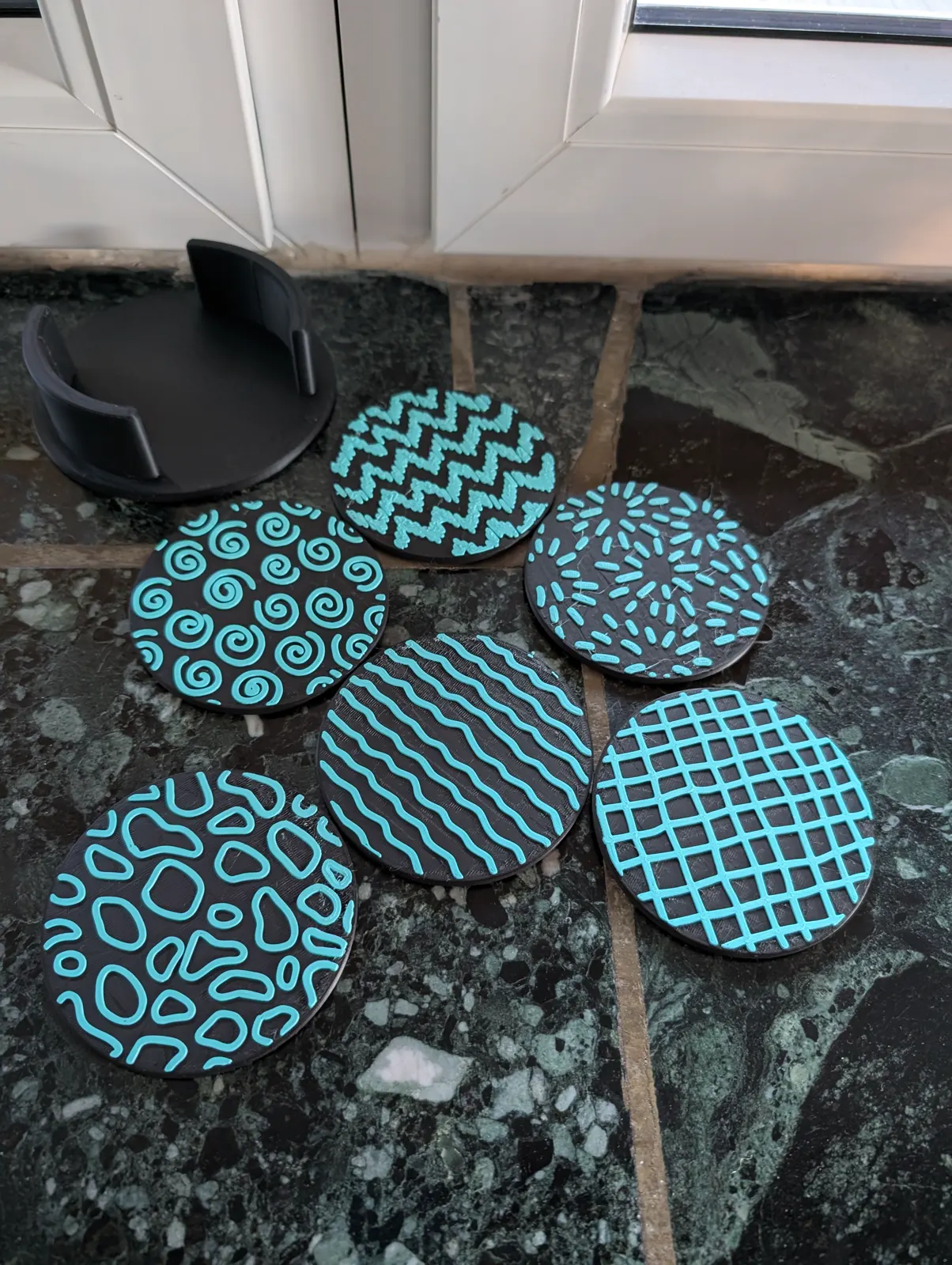 Reference example
Two-colour raised-pattern setvia printables.com · Patrick Blom, CC BY-SA 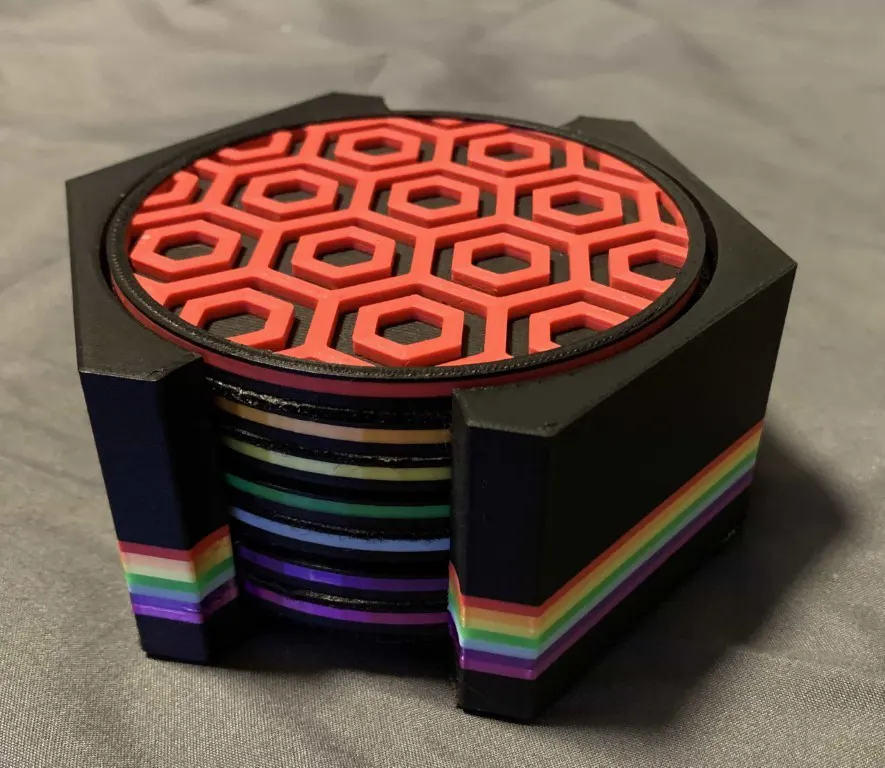 Reference example
Hexagon coaster set with holdervia printables.com · joey aronson, CC BY 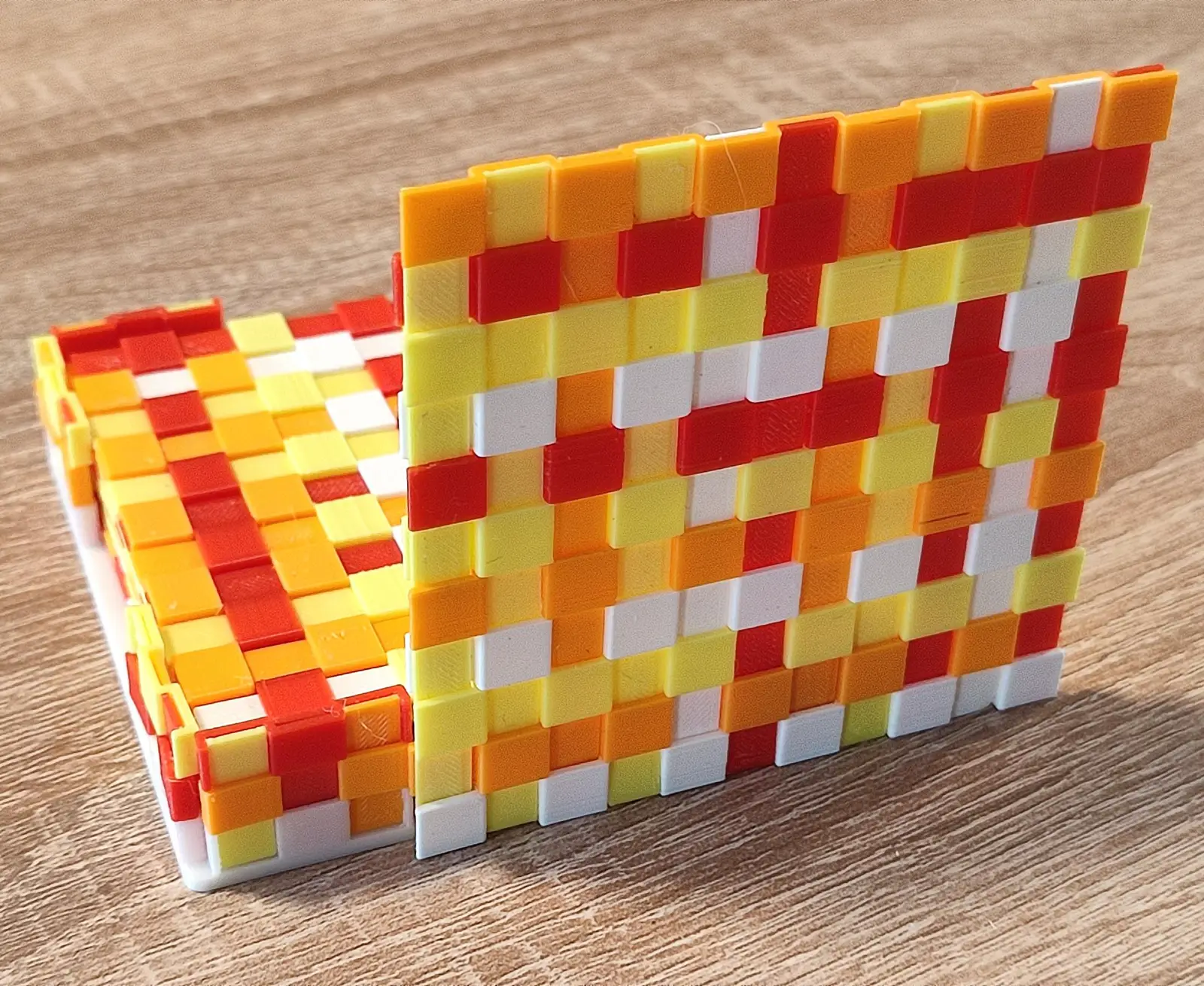 Reference example
Woven-look multicolour coastersvia instructables.com · CC BY-SA 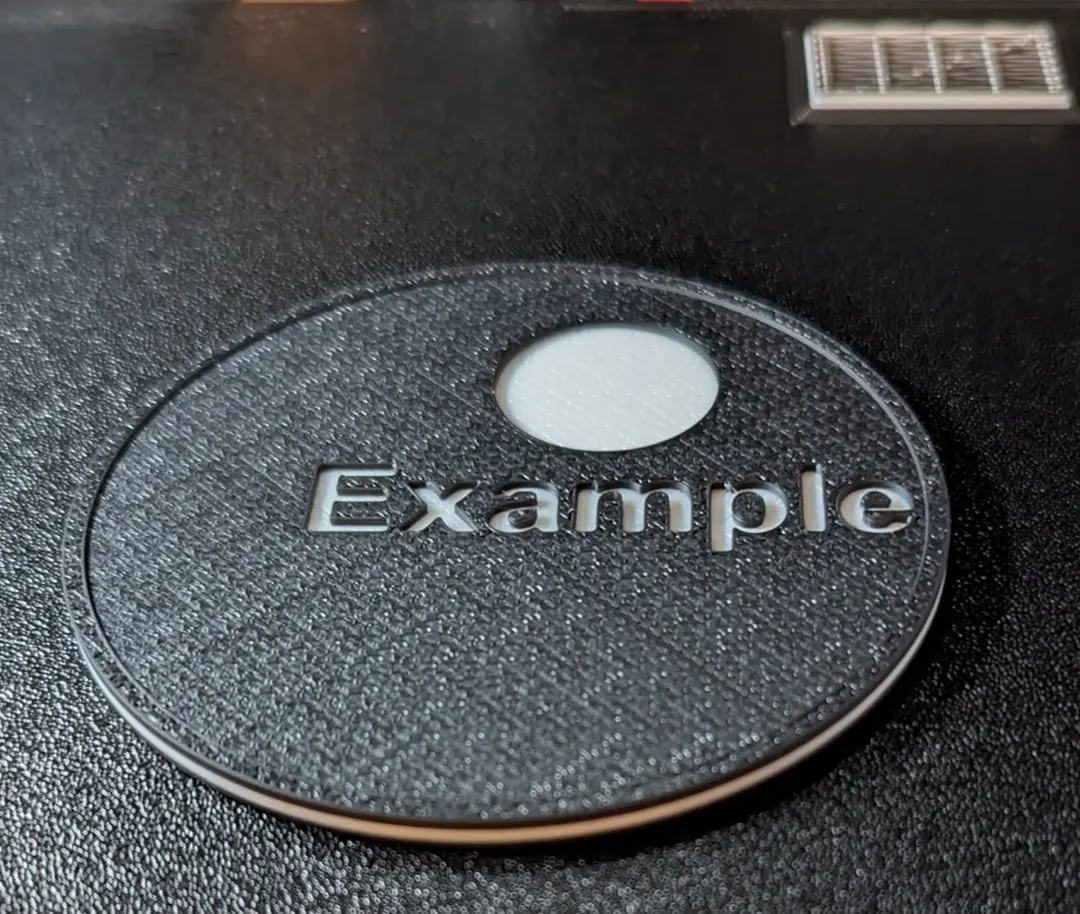 Reference example
Custom text coaster on the bedvia makerworld.com · JP.Potter, CC BY
Reference examples by other makers, shown to illustrate printed coasters. They were not made with this tool; licences and authors are listed with each photo.
Coasters made with this generator
Real outputs of the tool above, rendered in the preview.
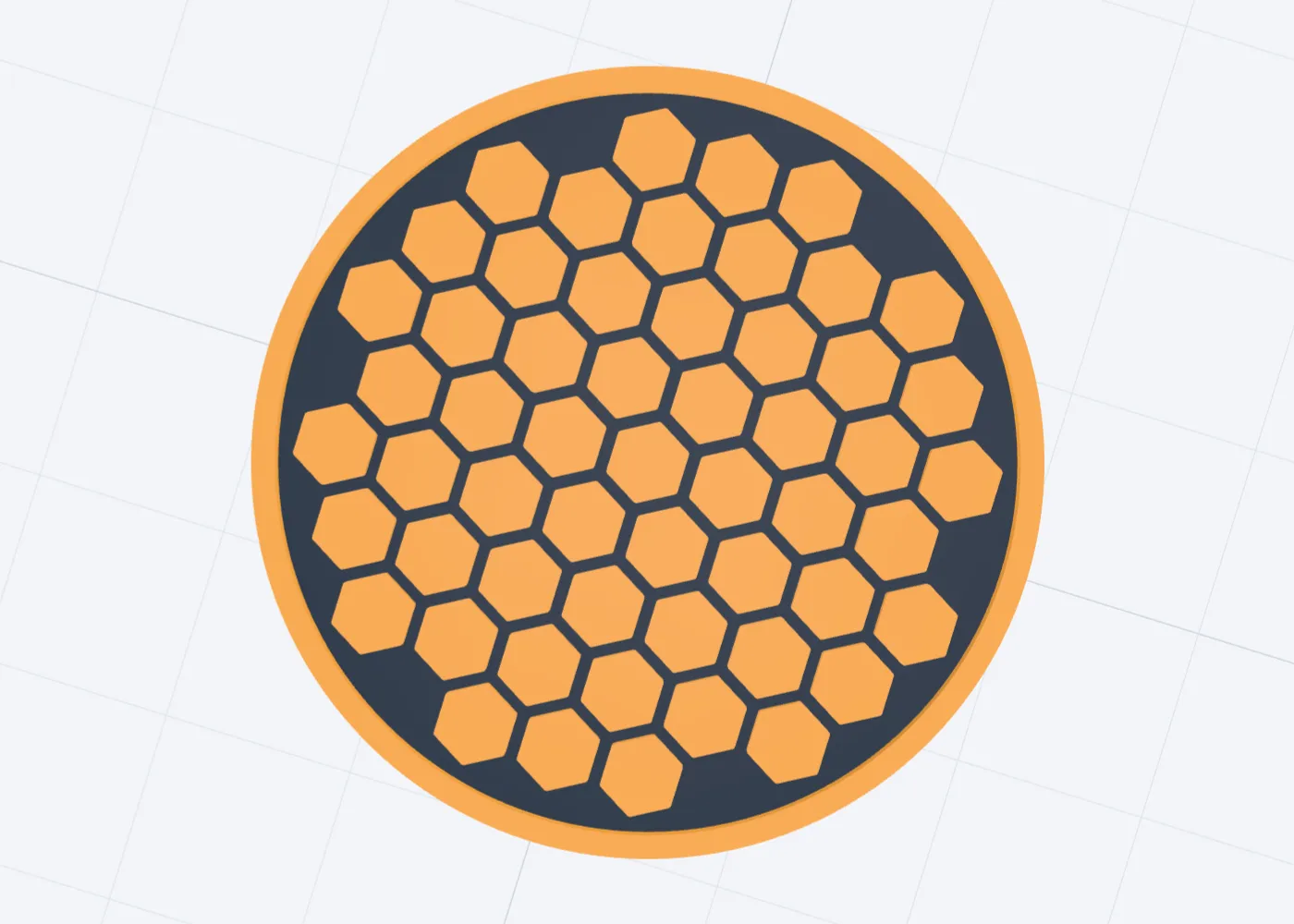
Honeycomb round
100 mm round coaster, 11 mm hexagon tiles, 3 mm rim — the default preset.
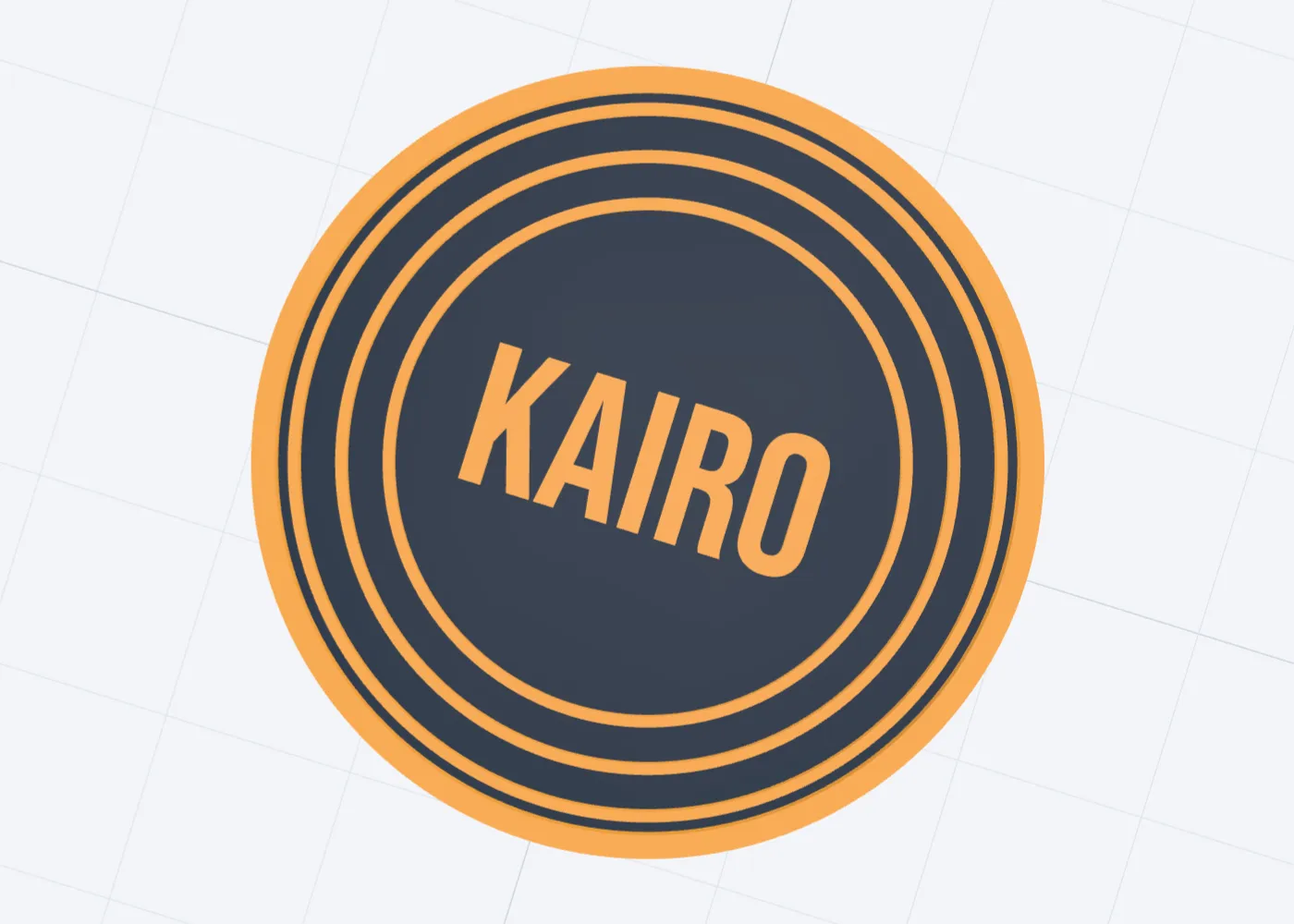
Name coaster
One line of text in Bebas, concentric rings kept clear of the letters.
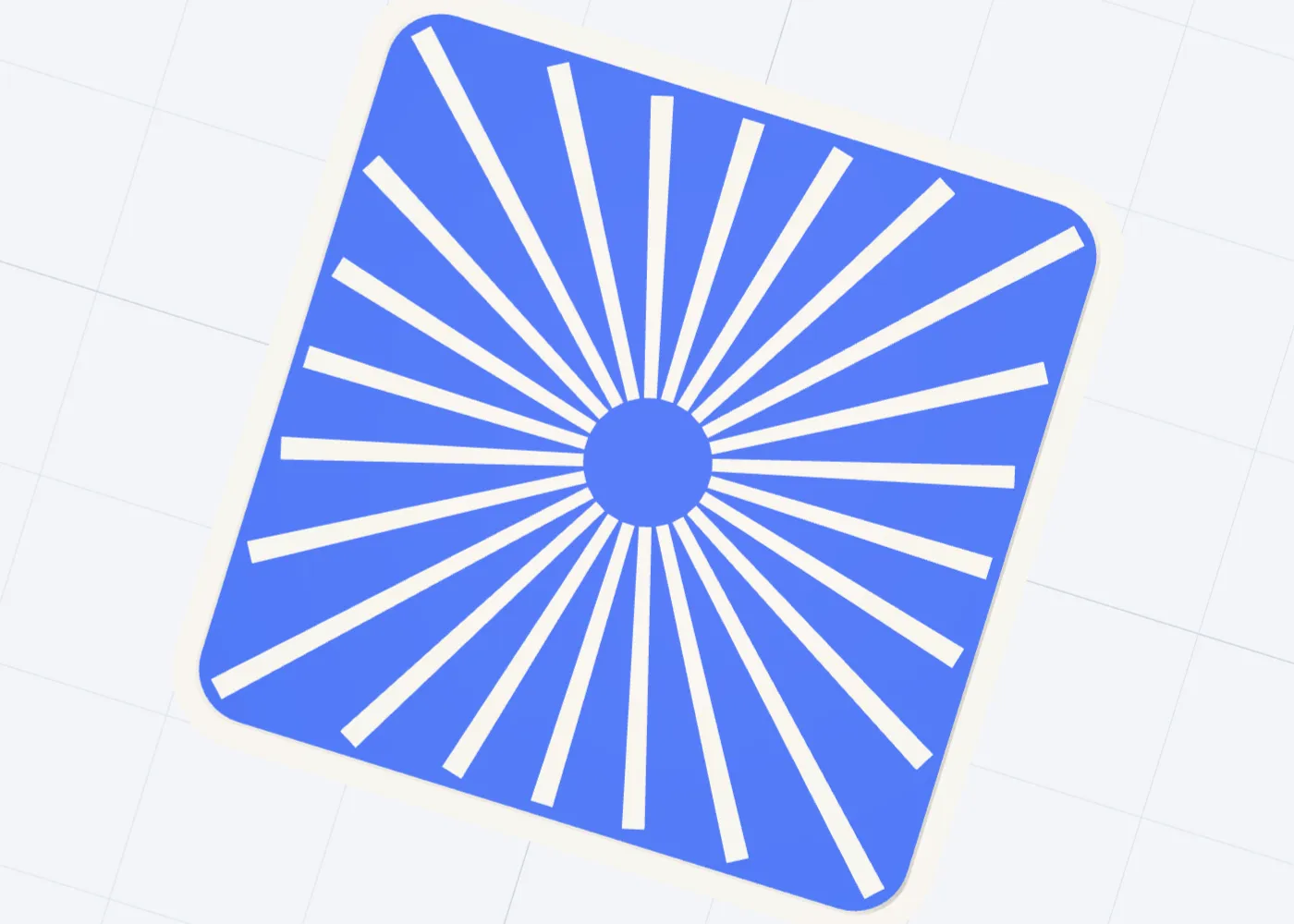
Sunburst square
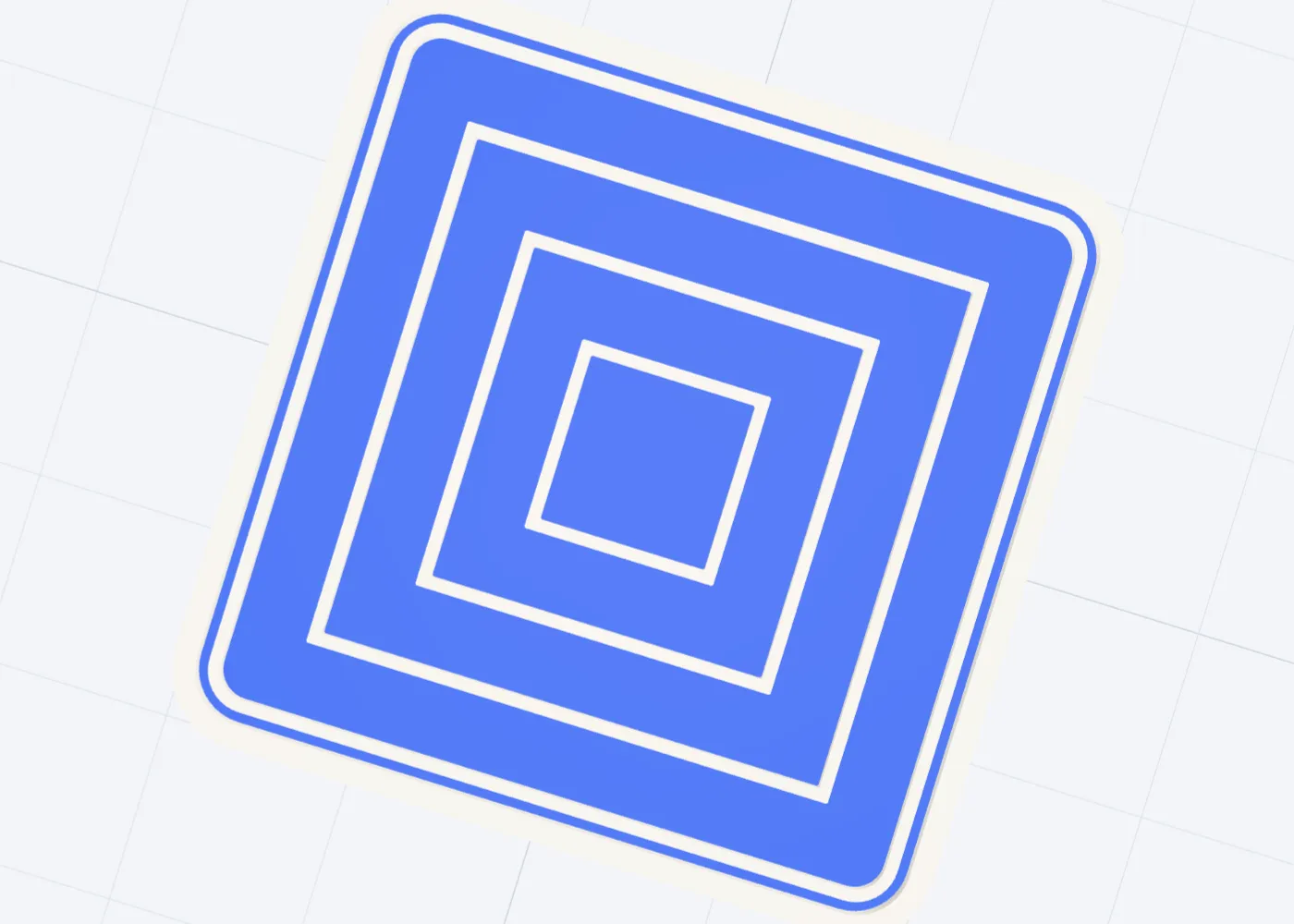
Square plate with rounded corners and 24 tapered rays reaching into the corners.
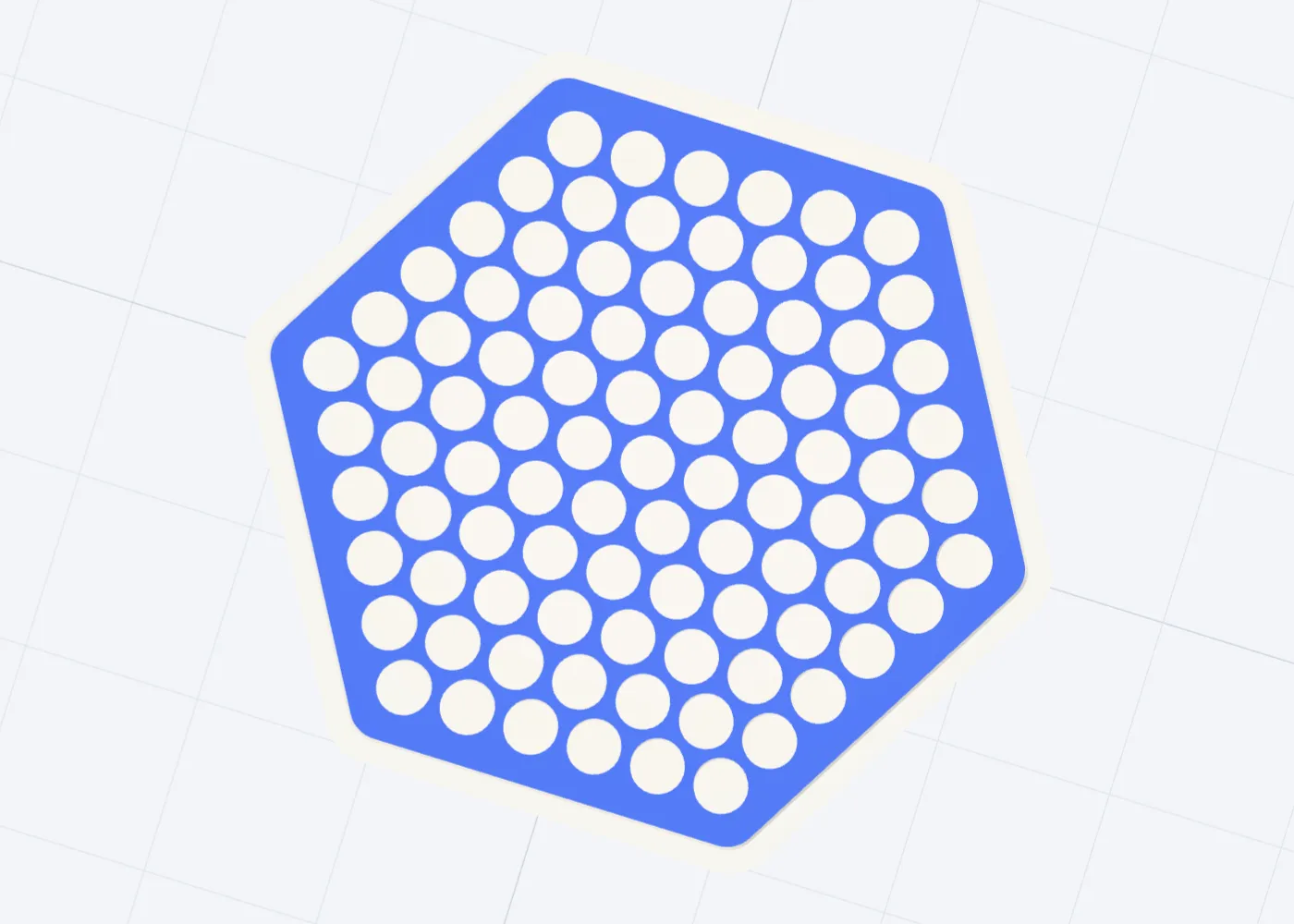
Hexagon with dots
Hexagonal coaster with a dot grid — tiles nicely when you print a set.
Why use this coaster generator
Parametric, so every coaster in a set matches to the tenth of a millimetre.
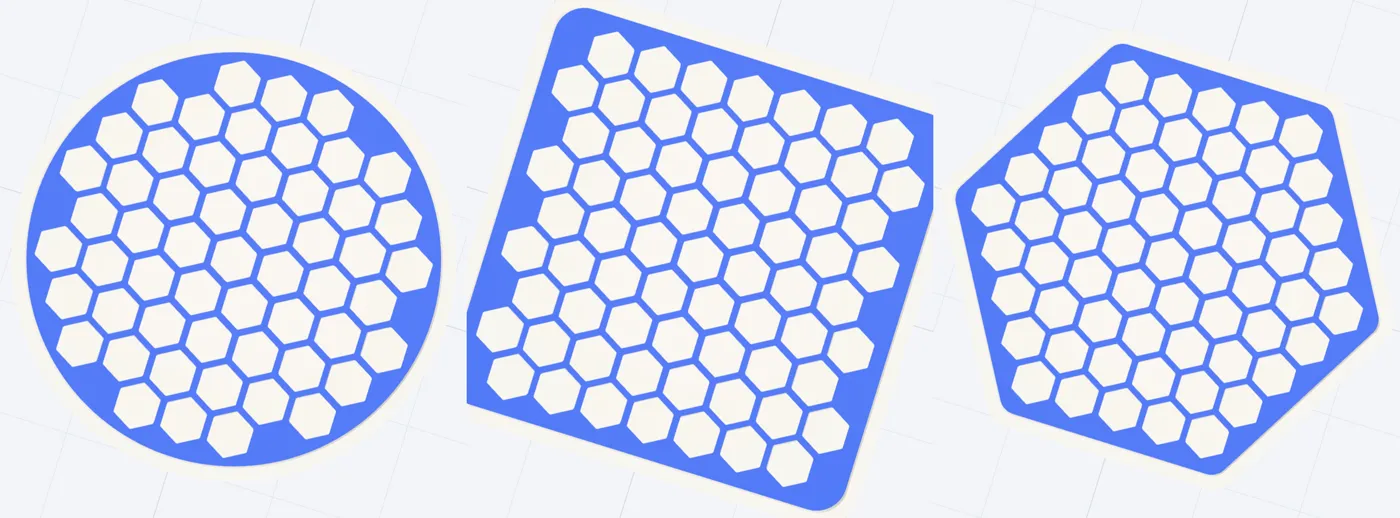
Three shapes, any size
Round, square with rounded corners, or a hexagon that tiles into a honeycomb set. Size from 60 to 160 mm, corners from sharp to soft.
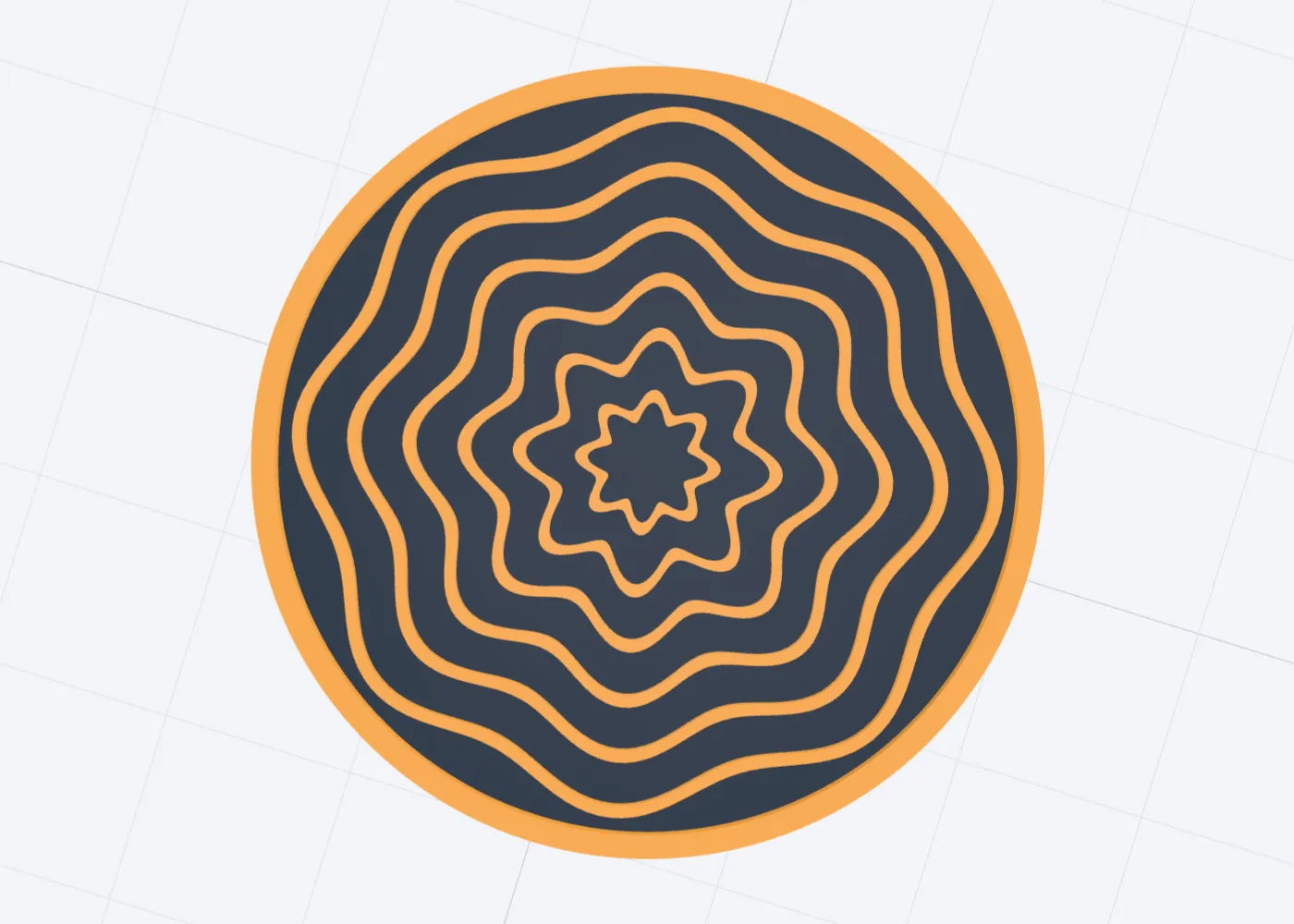
Patterns that fit the outline
Hexagons, dots, rings, sunburst and waves are laid out inside the rim and only whole cells are kept, so nothing is cut in half at the edge.
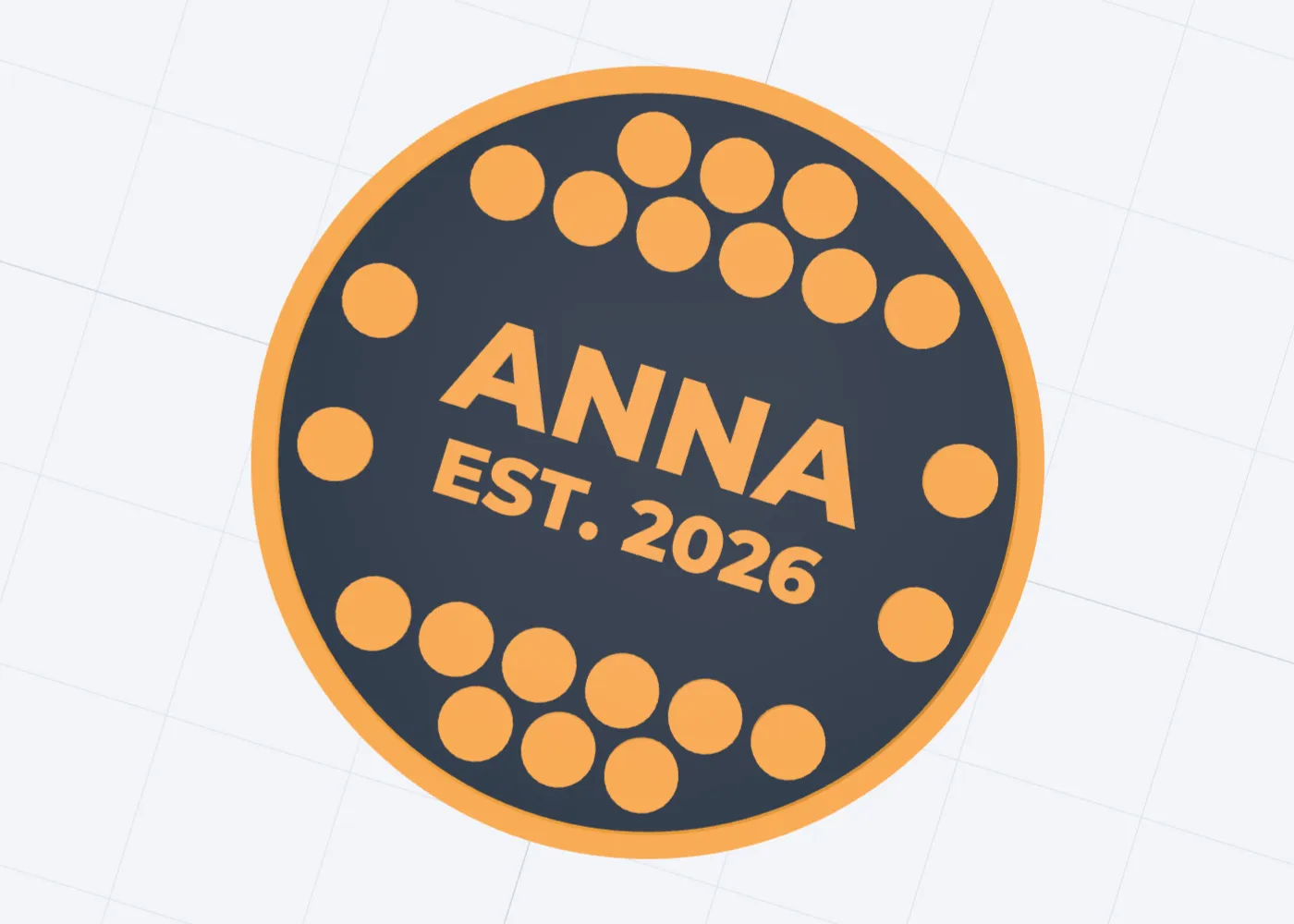
Your text, kept clear
Type a name, a date or a short line in six fonts, including Chinese. The text shrinks to fit and the pattern opens a clear space around it.

Two colours without an AMS
The plate is one body and everything above it is another. Swap filament once at the height shown, or load the two STLs into a multi-material slicer.
Anti-slip underneath
Add four recesses for 10 mm silicone bumpers or one shallow pocket for a cork or felt pad, so the coaster grips a polished table.
Private by design
The geometry is computed in your browser. Nothing you type or download is sent to a server.
Coaster generator FAQ
More ways to work with your 3D files
View, convert, or make a model from scratch.
Vase Generator
Create twisted, ribbed vases for spiral vase mode.
Gridfinity Generator
Generate Gridfinity bins and baseplates in any size.
Keychain Generator
Design a custom name keychain and download the STL.
Lithophane Generator
Turn a photo into a printable lithophane.
SVG to STL
Extrude an SVG logo or drawing into a 3D STL.
Want a 3D model instead of a flat coaster?
Turn a photo into a printable 3D model with Kairo3D’s AI image to STL generator.